logo
Good price  online

products details

Home > Products >
Coating Additives
>
Cas 88-12-0 N-Vinyl-2-Pyrrolidone NVP

Cas 88-12-0 N-Vinyl-2-Pyrrolidone NVP

Brand Name: Chemfine
Model Number: NVP
MOQ: 100Kg
Payment Terms: L/C,T/T
Detail Information
Place of Origin:
China
Certification:
REACH
Content:
99.5%
CAS No:
88-12-0
Application:
Organic Intermediate
EINECS:
201-800-4
MF:
C6H9NO
Sample:
Available
Supply Ability:
50T/M
Highlight:

cas number 88-12-0

,

cas no 88-12-0

,

nvp n-vinyl-2-pyrrolidone

Product Description
Product Selling Points
  • Ultra-high purity: ≥99.8% minimum assay (actual 99.88%), ensures consistent polymerization performance
  • Extremely low residual 2-pyrrolidone: ≤0.10% maximum (actual 0.01%), meets strict pharmaceutical and cosmetic standards
  • Ultra-low moisture content: ≤0.05% maximum (actual 0.02%), prevents premature polymerization and improves product stability
  • Excellent color stability: ≤20 APHA chromaticity (actual 15), ideal for clear and light-colored products
  • Controlled pH value: ≤10.5 (10% aqueous solution, actual 9.6), compatible with most formulation systems
  • Transparent appearance: Clear liquid without visible impurities, no suspended matter
  • Reactive vinyl group: Provides excellent polymerization reactivity for various polymer synthesis
  • Good solubility: Miscible with water, alcohol, ether and most organic solvents
  • Multi-functional performance: Serves as monomer, crosslinker, reactive diluent and solubilizer
  • Strict quality control: Batch-to-batch consistency guaranteed, suitable for high-end pharmaceutical and cosmetic applications

Certificate of Analysis (COA)
Item Standard Results
Appearance Transparent, without visible impurities Conform
Chromaticity, APHA ≤20 15
NVP purity, w% ≥99.8 99.88
2-pyrrolidone content, w% ≤0.10 0.01
Water content, w% ≤0.05 0.02
PH (10% aqueous solution) ≤10.5 9.6
CONCLUSION Conforms to Enterprise Standards Qualified

Product Introduction

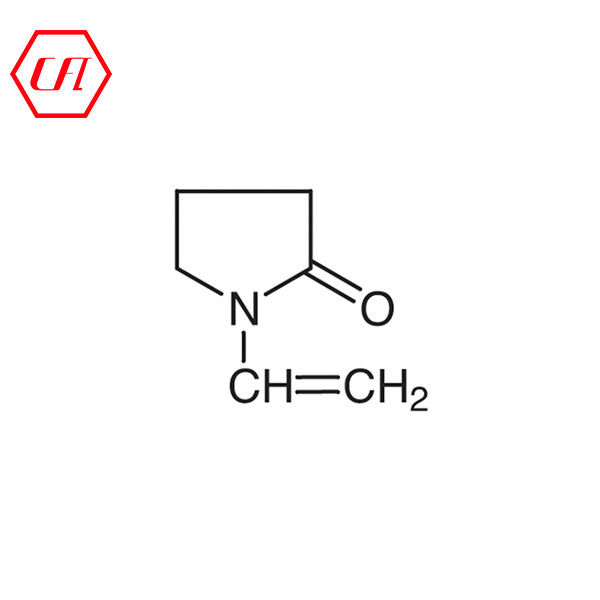
N-Vinyl-2-pyrrolidone, commonly known as NVP or Vinylpyrrolidone, is a reactive vinyl monomer with CAS number 88-12-0. Its molecular formula is C6H9NO, with a molecular weight of 111.14 g/mol. Our industrial and pharmaceutical grade product appears as a clear, colorless liquid without visible impurities, with strict control over purity, residual monomers, moisture and chromaticity.

As the primary raw material for the synthesis of polyvinylpyrrolidone (PVP), NVP is widely used in various industries. It undergoes free radical polymerization to form PVP, a versatile polymer with excellent solubility, biocompatibility and film-forming properties. NVP is also extensively used as a pharmaceutical intermediate, cosmetic raw material, adhesive monomer and reactive diluent in coatings. Its unique combination of reactivity and biocompatibility makes it an essential raw material in many high-end applications.

Our N-vinyl-2-pyrrolidone is produced with advanced synthesis and purification technology, with full batch traceability and complete supporting quality documents. It contains a small amount of stabilizer to prevent self-polymerization during storage and transportation. We can provide customized specifications to meet specific customer requirements and ensure long-term stable bulk supply for global industrial manufacturers.


Commercial Terms

Appearance: Transparent liquid without visible impurities


Packaging: 200kg UN-approved steel drum with nitrogen protection; 1000L IBC tote; Customized packaging available upon request

MOQ: 1 Metric Ton (25kg sample drum supported for testing and evaluation)

Storage Conditions: Store in tightly sealed containers under nitrogen atmosphere in a cool, dry and well-ventilated warehouse at 5-25℃; Keep away from heat sources, open flames and strong oxidizing agents; Avoid direct sunlight; 12-month shelf life under proper storage conditions

Transport Classification: 6.1 (Toxic Substance)

Packing Group: III


Synonyms
  • NVP
  • Vinylpyrrolidone
  • 1-Vinyl-2-pyrrolidone
  • N-Vinylpyrrolidone
  • 1-Ethenyl-2-pyrrolidinone
  • CAS 88-12-0
  • PVP Monomer
  • Pharmaceutical Grade NVP
  • Cosmetic Grade N-Vinyl-2-pyrrolidone

Core Application Scenarios (Ranked by Importance)
  1. Polymer Synthesis Industry (Core Application): Used as the primary monomer for the synthesis of polyvinylpyrrolidone (PVP) and its copolymers. PVP is widely used in pharmaceuticals, cosmetics, food and industrial applications due to its excellent biocompatibility and solubility.
  2. Pharmaceutical Industry: Applied as a pharmaceutical intermediate and reactive diluent. Used in the production of drug delivery systems, ophthalmic preparations and topical medications.
  3. Cosmetic Industry: Used as a film-forming agent, hair fixative and solubilizer in hair sprays, mousses, shampoos and skin care products. Provides excellent hold and conditioning properties.
  4. Adhesives Industry: Applied as a reactive monomer and crosslinker in pressure-sensitive adhesives, structural adhesives and UV-curable adhesives. Improves adhesive strength and durability.
  5. Coatings Industry: Used as a reactive diluent and crosslinker in UV-curable coatings, water-based coatings and anti-corrosion coatings. Enhances coating hardness, adhesion and scratch resistance.
  6. Other Industrial Fields: Employed in textile processing, paper manufacturing, printing inks and electronic materials.

Technical FAQ
Q1: Does NVP contain a stabilizer and what is its content?

A1: Yes, our NVP contains a small amount of stabilizer (typically 50-200 ppm of MEHQ or hydroquinone) to prevent self-polymerization during storage and transportation. The stabilizer content is strictly controlled and does not affect most polymerization processes. For applications requiring stabilizer-free NVP, please contact us for customized products.

Q2: What is the shelf life of NVP and how should it be stored?

A2: NVP has a shelf life of 12 months when stored in tightly sealed original containers under nitrogen atmosphere at temperatures between 5-25℃. It should be stored away from heat sources, direct sunlight and strong oxidizing agents. Containers should be kept tightly closed when not in use to prevent air exposure and moisture absorption.

Q3: What happens if NVP polymerizes during storage?

A3: NVP is a reactive monomer that can undergo self-polymerization if exposed to heat, light or initiators. Polymerized NVP forms a viscous gel or solid that is insoluble in most solvents. Once polymerized, the product cannot be used and must be disposed of properly.

Q4: What personal protective equipment (PPE) is required when handling NVP?

A4: NVP is a toxic substance and may cause skin and eye irritation. Required PPE includes:

  • Chemical-resistant gloves (nitrile or butyl rubber)
  • Safety goggles with face shield
  • Chemical-resistant apron and protective clothing
  • Respiratory protection if working in poorly ventilated areas
Q5: Can NVP be used in food contact applications?

A5: NVP itself is not approved for direct food contact. However, polymers derived from NVP (such as PVP) are approved for use in food contact applications in most countries when used in accordance with relevant regulations.

Q6: What is the difference between industrial grade and pharmaceutical grade NVP?

A6: Pharmaceutical grade NVP has stricter control over impurities, especially residual 2-pyrrolidone, heavy metals and microbial content. It also meets additional regulatory requirements for pharmaceutical applications. Industrial grade NVP is suitable for most general industrial applications such as polymer synthesis, adhesives and coatings.

Good price  online

Products Details

Home > Products >
Coating Additives
>
Cas 88-12-0 N-Vinyl-2-Pyrrolidone NVP

Cas 88-12-0 N-Vinyl-2-Pyrrolidone NVP

Brand Name: Chemfine
Model Number: NVP
MOQ: 100Kg
Payment Terms: L/C,T/T
Detail Information
Place of Origin:
China
Brand Name:
Chemfine
Certification:
REACH
Model Number:
NVP
Content:
99.5%
CAS No:
88-12-0
Application:
Organic Intermediate
EINECS:
201-800-4
MF:
C6H9NO
Sample:
Available
Minimum Order Quantity:
100Kg
Delivery Time:
30 days
Payment Terms:
L/C,T/T
Supply Ability:
50T/M
Highlight:

cas number 88-12-0

,

cas no 88-12-0

,

nvp n-vinyl-2-pyrrolidone

Product Description
Product Selling Points
  • Ultra-high purity: ≥99.8% minimum assay (actual 99.88%), ensures consistent polymerization performance
  • Extremely low residual 2-pyrrolidone: ≤0.10% maximum (actual 0.01%), meets strict pharmaceutical and cosmetic standards
  • Ultra-low moisture content: ≤0.05% maximum (actual 0.02%), prevents premature polymerization and improves product stability
  • Excellent color stability: ≤20 APHA chromaticity (actual 15), ideal for clear and light-colored products
  • Controlled pH value: ≤10.5 (10% aqueous solution, actual 9.6), compatible with most formulation systems
  • Transparent appearance: Clear liquid without visible impurities, no suspended matter
  • Reactive vinyl group: Provides excellent polymerization reactivity for various polymer synthesis
  • Good solubility: Miscible with water, alcohol, ether and most organic solvents
  • Multi-functional performance: Serves as monomer, crosslinker, reactive diluent and solubilizer
  • Strict quality control: Batch-to-batch consistency guaranteed, suitable for high-end pharmaceutical and cosmetic applications

Certificate of Analysis (COA)
Item Standard Results
Appearance Transparent, without visible impurities Conform
Chromaticity, APHA ≤20 15
NVP purity, w% ≥99.8 99.88
2-pyrrolidone content, w% ≤0.10 0.01
Water content, w% ≤0.05 0.02
PH (10% aqueous solution) ≤10.5 9.6
CONCLUSION Conforms to Enterprise Standards Qualified

Product Introduction

N-Vinyl-2-pyrrolidone, commonly known as NVP or Vinylpyrrolidone, is a reactive vinyl monomer with CAS number 88-12-0. Its molecular formula is C6H9NO, with a molecular weight of 111.14 g/mol. Our industrial and pharmaceutical grade product appears as a clear, colorless liquid without visible impurities, with strict control over purity, residual monomers, moisture and chromaticity.

As the primary raw material for the synthesis of polyvinylpyrrolidone (PVP), NVP is widely used in various industries. It undergoes free radical polymerization to form PVP, a versatile polymer with excellent solubility, biocompatibility and film-forming properties. NVP is also extensively used as a pharmaceutical intermediate, cosmetic raw material, adhesive monomer and reactive diluent in coatings. Its unique combination of reactivity and biocompatibility makes it an essential raw material in many high-end applications.

Our N-vinyl-2-pyrrolidone is produced with advanced synthesis and purification technology, with full batch traceability and complete supporting quality documents. It contains a small amount of stabilizer to prevent self-polymerization during storage and transportation. We can provide customized specifications to meet specific customer requirements and ensure long-term stable bulk supply for global industrial manufacturers.


Commercial Terms

Appearance: Transparent liquid without visible impurities


Packaging: 200kg UN-approved steel drum with nitrogen protection; 1000L IBC tote; Customized packaging available upon request

MOQ: 1 Metric Ton (25kg sample drum supported for testing and evaluation)

Storage Conditions: Store in tightly sealed containers under nitrogen atmosphere in a cool, dry and well-ventilated warehouse at 5-25℃; Keep away from heat sources, open flames and strong oxidizing agents; Avoid direct sunlight; 12-month shelf life under proper storage conditions

Transport Classification: 6.1 (Toxic Substance)

Packing Group: III


Synonyms
  • NVP
  • Vinylpyrrolidone
  • 1-Vinyl-2-pyrrolidone
  • N-Vinylpyrrolidone
  • 1-Ethenyl-2-pyrrolidinone
  • CAS 88-12-0
  • PVP Monomer
  • Pharmaceutical Grade NVP
  • Cosmetic Grade N-Vinyl-2-pyrrolidone

Core Application Scenarios (Ranked by Importance)
  1. Polymer Synthesis Industry (Core Application): Used as the primary monomer for the synthesis of polyvinylpyrrolidone (PVP) and its copolymers. PVP is widely used in pharmaceuticals, cosmetics, food and industrial applications due to its excellent biocompatibility and solubility.
  2. Pharmaceutical Industry: Applied as a pharmaceutical intermediate and reactive diluent. Used in the production of drug delivery systems, ophthalmic preparations and topical medications.
  3. Cosmetic Industry: Used as a film-forming agent, hair fixative and solubilizer in hair sprays, mousses, shampoos and skin care products. Provides excellent hold and conditioning properties.
  4. Adhesives Industry: Applied as a reactive monomer and crosslinker in pressure-sensitive adhesives, structural adhesives and UV-curable adhesives. Improves adhesive strength and durability.
  5. Coatings Industry: Used as a reactive diluent and crosslinker in UV-curable coatings, water-based coatings and anti-corrosion coatings. Enhances coating hardness, adhesion and scratch resistance.
  6. Other Industrial Fields: Employed in textile processing, paper manufacturing, printing inks and electronic materials.

Technical FAQ
Q1: Does NVP contain a stabilizer and what is its content?

A1: Yes, our NVP contains a small amount of stabilizer (typically 50-200 ppm of MEHQ or hydroquinone) to prevent self-polymerization during storage and transportation. The stabilizer content is strictly controlled and does not affect most polymerization processes. For applications requiring stabilizer-free NVP, please contact us for customized products.

Q2: What is the shelf life of NVP and how should it be stored?

A2: NVP has a shelf life of 12 months when stored in tightly sealed original containers under nitrogen atmosphere at temperatures between 5-25℃. It should be stored away from heat sources, direct sunlight and strong oxidizing agents. Containers should be kept tightly closed when not in use to prevent air exposure and moisture absorption.

Q3: What happens if NVP polymerizes during storage?

A3: NVP is a reactive monomer that can undergo self-polymerization if exposed to heat, light or initiators. Polymerized NVP forms a viscous gel or solid that is insoluble in most solvents. Once polymerized, the product cannot be used and must be disposed of properly.

Q4: What personal protective equipment (PPE) is required when handling NVP?

A4: NVP is a toxic substance and may cause skin and eye irritation. Required PPE includes:

  • Chemical-resistant gloves (nitrile or butyl rubber)
  • Safety goggles with face shield
  • Chemical-resistant apron and protective clothing
  • Respiratory protection if working in poorly ventilated areas
Q5: Can NVP be used in food contact applications?

A5: NVP itself is not approved for direct food contact. However, polymers derived from NVP (such as PVP) are approved for use in food contact applications in most countries when used in accordance with relevant regulations.

Q6: What is the difference between industrial grade and pharmaceutical grade NVP?

A6: Pharmaceutical grade NVP has stricter control over impurities, especially residual 2-pyrrolidone, heavy metals and microbial content. It also meets additional regulatory requirements for pharmaceutical applications. Industrial grade NVP is suitable for most general industrial applications such as polymer synthesis, adhesives and coatings.