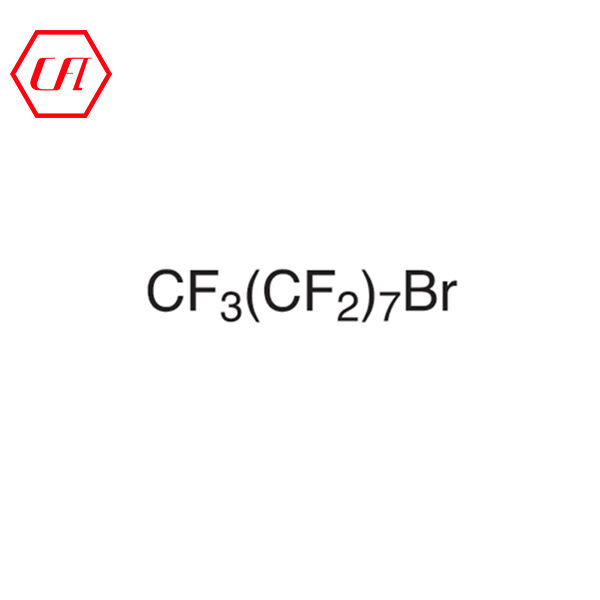
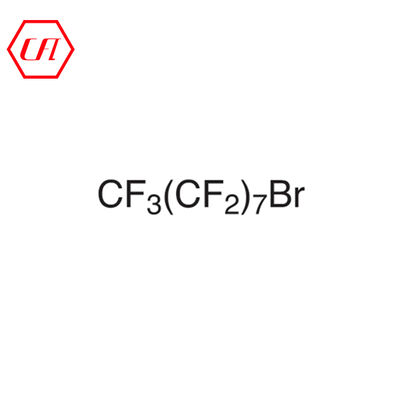
1-Bromoheptadecafluorooctane, widely known as Perfluorooctyl bromide or PFOB (CAS 423-55-2), is a clear, colorless, and extremely dense perfluorinated liquid. It features a long eight-carbon perfluorinated chain with a single bromine atom at the terminal position. This unique structure grants 1-Bromoheptadecafluorooctane (CAS 423-55-2) exceptional properties, including high radiopacity (visibility under X-ray/CT), high oxygen solubility, and extreme chemical inertness. It is a vital material in advanced medical research, specifically in the development of ultrasound and CT contrast agents, as well as in the formulation of oxygen-carrying emulsions for liquid ventilation and pharmaceutical delivery.
High Radiopacity: The presence of the bromine atom makes it highly visible under X-ray and CT imaging, making it an ideal contrast medium.
Exceptional Oxygen Dissolution: Capable of carrying large volumes of respiratory gases, essential for "artificial blood" and liquid ventilation studies.
Superior Chemical Inertness: Highly resistant to metabolic breakdown and chemical attack, ensuring stability in biological and industrial environments.
Ultra-High Density: With a density near 1.9 g/cm3, it is one of the heaviest liquids available, useful in specialized separation and buoyancy applications.
Low Surface Tension: Excellent spreading properties for uniform coating and emulsion stability in pharmaceutical formulations.
High Purity (≥ 99.0%): Our refined production process ensures minimal hydrogen-containing impurities and extremely low moisture content.
Medical Imaging and Contrast Agents
This product is a primary ingredient for X-ray, CT, and ultrasound contrast agents. Its high density and bromine atom provide sharp contrast for imaging the gastrointestinal tract and vascular systems.
Drug Delivery and Oxygen Carriers
Used in the development of injectable emulsions that act as temporary oxygen carriers. It is also researched for liquid ventilation applications to treat acute respiratory distress syndrome (ARDS).
Semiconductor and Nanotechnology
Used as a high-density, non-conductive solvent or cleaning agent in specialized microelectronic manufacturing where residues must be eliminated.
Chemical Intermediate
Serves as a building block in the synthesis of specialized fluorinated surfactants and polymers where a terminal bromine group is required for further functionalization.
Standard industrial packaging options for 1-Bromoheptadecafluorooctane include:
1kg, 5kg, or 10kg high-purity aluminum bottles or fluorinated plastic canisters.
25kg or 50kg specialized lined steel drums for industrial-scale pharmaceutical production.
Custom small-volume amber glass bottles for laboratory research (protects from light).
All containers are nitrogen-blanketed to ensure the material remains moisture-free and stable.
1-Bromoheptadecafluorooctane should be stored in a cool, dry, and dark warehouse. It is sensitive to prolonged light exposure, which may cause slight discoloration over time; therefore, it should be kept in amber or opaque containers. Keep containers tightly sealed. Store away from molten alkali metals, strong reducing agents, and powdered metals (such as aluminum or magnesium).
Perfluorooctyl bromide, PFOB, Perflubron, 1-Bromo-perfluorooctane, Heptadecafluorooctyl bromide.
| Property | Value/Description |
| CAS Number | 423-55-2 |
| Molecular Formula | C8BrF17 |
| Molecular Weight | 498.96 |
| EINECS Number | 207-028-4 |
| Appearance | Clear colorless liquid |
| Boiling Point | 142°C - 144°C |
| Density | 1.92 - 1.94 g/cm3 (at 20°C) |
| Refractive Index | 1.303 - 1.305 |
| Solubility | Insoluble in water; miscible with other fluorinated solvents |
| Test Item | Specification Standard |
| Appearance | Clear and Colorless Liquid |
| Assay (GC) | ≥ 99.0% |
| Moisture (KF) | ≤ 50 ppm |
| Non-Volatile Residue | ≤ 10 ppm |
| Free Bromine | Pass Test (Negative) |
| Color (APHA) | ≤ 10 |
Perfluorodecalin – CAS 306-94-5
Perfluorooctane – CAS 307-34-6
1-Iodoheptadecafluorooctane – CAS 507-63-1
Perfluorohexyl bromide – CAS 335-56-8
Perfluorodecyl bromide – CAS 307-43-7
3M Fluorinert PF-5080
Perfluoropolyether (PFPE) Fluids
Tridecafluoro-1-bromooctane – CAS 335-56-8
Perfluoro-n-octanoic acid (PFOA) – CAS 335-67-1
Perfluorooctyl iodide – CAS 507-63-1
Medical and Research Applications
Q1: Why is PFOB used instead of iodine-based contrast agents?
A1: PFOB is extremely inert and does not contain ionic iodine, making it a safer alternative for patients with iodine allergies or for specific imaging techniques like ultrasound (as an echo-contrast agent).
Q2: Is the product suitable for liquid ventilation?
A2: Our high-purity grade is designed for research in this area due to its high oxygen/CO2 solubility and low surface tension, though clinical use requires specific medical certifications.
Q3: Does PFOB evaporate quickly?
A3: It has a boiling point of 142°C, meaning it is stable at room temperature and has a relatively low evaporation rate compared to lighter fluorocarbons like perfluorohexane.
Technical and Logistics
Q1: Does the product turn yellow over time?
A1: Exposure to UV light can cause trace liberation of bromine, leading to a slight yellow tint. This can be prevented by storing the product in amber glass or metal containers.
Q2: Is it considered a hazardous material for air transport?
A2: Generally, PFOB is not regulated as a dangerous good for transport (Non-hazardous for IATA/IMDG) as it is non-flammable and has low toxicity, but always refer to the specific SDS for your region.
Q3: Can it be used in electronics as a coolant?
A3: Yes, its dielectric properties and high density make it an excellent coolant, though it is more commonly reserved for high-value medical and chemical synthesis due to its cost.
1-Bromoheptadecafluorooctane, widely known as Perfluorooctyl bromide or PFOB (CAS 423-55-2), is a clear, colorless, and extremely dense perfluorinated liquid. It features a long eight-carbon perfluorinated chain with a single bromine atom at the terminal position. This unique structure grants 1-Bromoheptadecafluorooctane (CAS 423-55-2) exceptional properties, including high radiopacity (visibility under X-ray/CT), high oxygen solubility, and extreme chemical inertness. It is a vital material in advanced medical research, specifically in the development of ultrasound and CT contrast agents, as well as in the formulation of oxygen-carrying emulsions for liquid ventilation and pharmaceutical delivery.
High Radiopacity: The presence of the bromine atom makes it highly visible under X-ray and CT imaging, making it an ideal contrast medium.
Exceptional Oxygen Dissolution: Capable of carrying large volumes of respiratory gases, essential for "artificial blood" and liquid ventilation studies.
Superior Chemical Inertness: Highly resistant to metabolic breakdown and chemical attack, ensuring stability in biological and industrial environments.
Ultra-High Density: With a density near 1.9 g/cm3, it is one of the heaviest liquids available, useful in specialized separation and buoyancy applications.
Low Surface Tension: Excellent spreading properties for uniform coating and emulsion stability in pharmaceutical formulations.
High Purity (≥ 99.0%): Our refined production process ensures minimal hydrogen-containing impurities and extremely low moisture content.
Medical Imaging and Contrast Agents
This product is a primary ingredient for X-ray, CT, and ultrasound contrast agents. Its high density and bromine atom provide sharp contrast for imaging the gastrointestinal tract and vascular systems.
Drug Delivery and Oxygen Carriers
Used in the development of injectable emulsions that act as temporary oxygen carriers. It is also researched for liquid ventilation applications to treat acute respiratory distress syndrome (ARDS).
Semiconductor and Nanotechnology
Used as a high-density, non-conductive solvent or cleaning agent in specialized microelectronic manufacturing where residues must be eliminated.
Chemical Intermediate
Serves as a building block in the synthesis of specialized fluorinated surfactants and polymers where a terminal bromine group is required for further functionalization.
Standard industrial packaging options for 1-Bromoheptadecafluorooctane include:
1kg, 5kg, or 10kg high-purity aluminum bottles or fluorinated plastic canisters.
25kg or 50kg specialized lined steel drums for industrial-scale pharmaceutical production.
Custom small-volume amber glass bottles for laboratory research (protects from light).
All containers are nitrogen-blanketed to ensure the material remains moisture-free and stable.
1-Bromoheptadecafluorooctane should be stored in a cool, dry, and dark warehouse. It is sensitive to prolonged light exposure, which may cause slight discoloration over time; therefore, it should be kept in amber or opaque containers. Keep containers tightly sealed. Store away from molten alkali metals, strong reducing agents, and powdered metals (such as aluminum or magnesium).
Perfluorooctyl bromide, PFOB, Perflubron, 1-Bromo-perfluorooctane, Heptadecafluorooctyl bromide.
| Property | Value/Description |
| CAS Number | 423-55-2 |
| Molecular Formula | C8BrF17 |
| Molecular Weight | 498.96 |
| EINECS Number | 207-028-4 |
| Appearance | Clear colorless liquid |
| Boiling Point | 142°C - 144°C |
| Density | 1.92 - 1.94 g/cm3 (at 20°C) |
| Refractive Index | 1.303 - 1.305 |
| Solubility | Insoluble in water; miscible with other fluorinated solvents |
| Test Item | Specification Standard |
| Appearance | Clear and Colorless Liquid |
| Assay (GC) | ≥ 99.0% |
| Moisture (KF) | ≤ 50 ppm |
| Non-Volatile Residue | ≤ 10 ppm |
| Free Bromine | Pass Test (Negative) |
| Color (APHA) | ≤ 10 |
Perfluorodecalin – CAS 306-94-5
Perfluorooctane – CAS 307-34-6
1-Iodoheptadecafluorooctane – CAS 507-63-1
Perfluorohexyl bromide – CAS 335-56-8
Perfluorodecyl bromide – CAS 307-43-7
3M Fluorinert PF-5080
Perfluoropolyether (PFPE) Fluids
Tridecafluoro-1-bromooctane – CAS 335-56-8
Perfluoro-n-octanoic acid (PFOA) – CAS 335-67-1
Perfluorooctyl iodide – CAS 507-63-1
Medical and Research Applications
Q1: Why is PFOB used instead of iodine-based contrast agents?
A1: PFOB is extremely inert and does not contain ionic iodine, making it a safer alternative for patients with iodine allergies or for specific imaging techniques like ultrasound (as an echo-contrast agent).
Q2: Is the product suitable for liquid ventilation?
A2: Our high-purity grade is designed for research in this area due to its high oxygen/CO2 solubility and low surface tension, though clinical use requires specific medical certifications.
Q3: Does PFOB evaporate quickly?
A3: It has a boiling point of 142°C, meaning it is stable at room temperature and has a relatively low evaporation rate compared to lighter fluorocarbons like perfluorohexane.
Technical and Logistics
Q1: Does the product turn yellow over time?
A1: Exposure to UV light can cause trace liberation of bromine, leading to a slight yellow tint. This can be prevented by storing the product in amber glass or metal containers.
Q2: Is it considered a hazardous material for air transport?
A2: Generally, PFOB is not regulated as a dangerous good for transport (Non-hazardous for IATA/IMDG) as it is non-flammable and has low toxicity, but always refer to the specific SDS for your region.
Q3: Can it be used in electronics as a coolant?
A3: Yes, its dielectric properties and high density make it an excellent coolant, though it is more commonly reserved for high-value medical and chemical synthesis due to its cost.