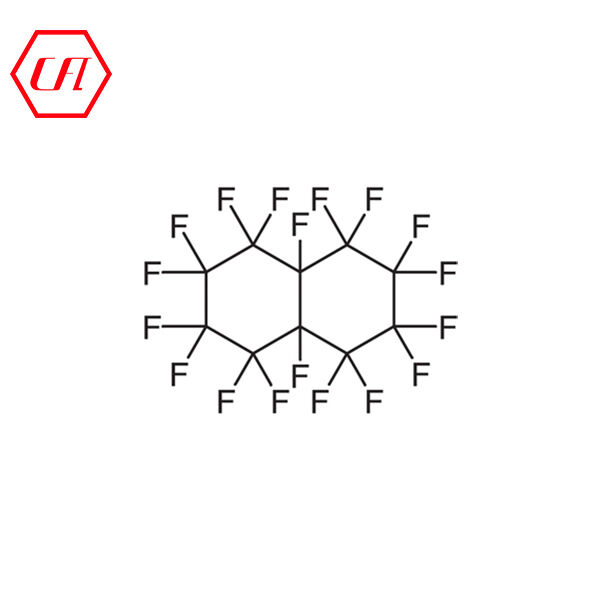
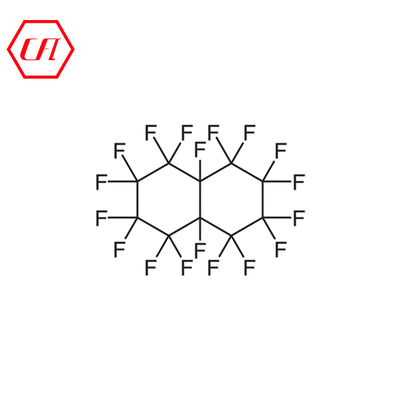
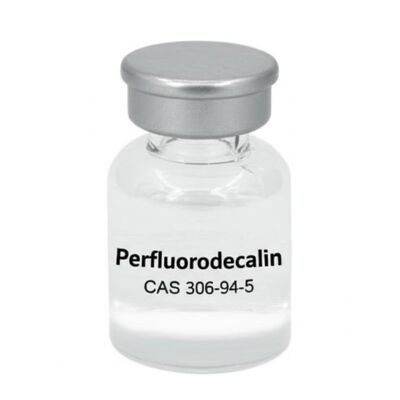
Perfluorodecalin (CAS 306-94-5) is a fully fluorinated, bicyclic saturated hydrocarbon with the chemical formula $C_{10}F_{18}$. It appears as a clear, colorless, and odorless liquid. Perfluorodecalin (CAS 306-94-5) belongs to the class of perfluorocarbons (PFCs) and is distinguished by its extreme chemical and thermal stability. Its most remarkable property is its ability to dissolve high concentrations of respiratory gases, particularly oxygen (O_2) and carbon dioxide (CO_2). This "oxygen-carrying" capability makes it a cornerstone material in biomedical research, advanced skin care formulations, and specialized industrial solvent systems.
Exceptional Oxygen Solubility: Capable of dissolving significantly more oxygen than water, making it a premier oxygenating agent.
Biocompatibility and Safety: Non-toxic, non-irritating, and chemically inert, making it ideal for medical and cosmetic applications.
Thermal and Chemical Stability: Resistant to acids, bases, and high temperatures; it does not degrade under harsh processing conditions.
Non-Flammable: Features no flash point, providing a safe alternative to hydrocarbon solvents in high-heat environments.
High Purity Grades: Chemfine provides grades $ge$ 99%, specifically refined to minimize impurities for sensitive pharmaceutical and electronic uses.
Superior Wetting and Spreadability: Its low surface tension allows it to penetrate micro-structures and spread evenly over biological or electronic surfaces.
Cosmetic and Skin Care Formulations
Widely used in "oxygenating" creams and serums. It acts as a vehicle to deliver oxygen directly to the skin, promoting cell regeneration, reducing the appearance of wrinkles, and improving overall skin radiance.
Biomedical Research and Artificial Blood
Due to its high gas solubility and low toxicity, it is used in research involving liquid ventilation, organ preservation, and as a component in blood substitute emulsions.
Semiconductor and Electronic Cooling
Functions as an inert heat transfer fluid for electronic components. Its high dielectric strength and thermal stability make it suitable for immersion cooling and thermal shock testing.
Organic and Fluorous Synthesis
Used as a fluorous solvent in fluorous biphase catalysis (FBC), allowing for the easy separation of catalysts from reaction products through phase separation.
Standard industrial packaging options for Perfluorodecalin include:
1kg, 5kg, or 10kg high-purity fluorinated plastic bottles or aluminum canisters.
25kg or 50kg specialized lined steel drums for industrial-scale use.
Custom small-volume packaging for laboratory R&D and pilot studies.
All containers are nitrogen-blanketed to ensure purity and prevent atmospheric contamination.
Perfluorodecalin should be stored in a cool, dry, and well-ventilated warehouse. Containers must be kept tightly sealed when not in use. While it is chemically stable and non-flammable, it should be protected from direct sunlight and kept away from molten alkali metals and strong reducing agents. Ensure the storage area is away from heat sources to prevent evaporation of this volatile liquid.
Perfluorodecalin, PFD, Decafluorodecalin, n-Perfluorodecalin, Octadecafluorodecalin, Bicyclo[4.4.0]decane perfluoro.
| Property | Value/Description |
|---|---|
| CAS Number | 306-94-5 |
| Molecular Formula | C10F18 |
| Molecular Weight | 462.08 |
| EINECS Number | 206-192-4 |
| Appearance | Clear colorless liquid |
| Boiling Point | ~142°C |
| Melting Point | ~-10°C (cis/trans mix) |
| Density | 1.908 g/cm³ (at 25°C) |
| Vapor Pressure | 0.88 kPa (at 25°C) |
| Surface Tension | 19 mN/m |
| Flash Point | None |
| Test Item | Specification Standard |
|---|---|
| Appearance | Clear Colorless Liquid |
| Assay (GC) | ≥ 99.0% |
| Moisture (KF) | ≤ 50 ppm |
| Non-Volatile Residue | ≤ 10 ppm |
| Acidity (as HF) | ≤ 0.1 ppm |
| Color (APHA) | ≤ 10 |
Perfluorooctane – CAS 307-34-6
Perfluorohexane – CAS 355-42-0
Perfluoromethyldecalin – CAS 306-97-8
Perfluorotributylamine – CAS 311-89-7
Perfluoroperhydrophenanthrene – CAS 306-91-2
3M Fluorinert FC-40 – CAS 86508-42-1
Perfluoropolyether (PFPE)
Perfluoroheptane – CAS 335-57-9
Perfluorononane – CAS 375-96-2
Tridecafluorooctane – CAS 21652-58-4
Q1: How much oxygen can Perfluorodecalin actually dissolve?
A1: It can dissolve approximately 40% to 50% by volume of oxygen at room temperature, which is significantly higher than water or plasma.
Q2: Is Perfluorodecalin safe for leave-on cosmetic products?
A2: Yes, it is widely used in high-end cosmetics. It is inert and does not react with skin components, serving purely as a gas transport agent and emollient.
Q3: Can it be absorbed through the skin?
A3: Due to its high molecular weight and hydrophobicity, it is not significantly absorbed into the bloodstream through the skin, making it safe for topical applications.
Q1: Is this product compatible with rubber seals?
A1: Most perfluorocarbons are compatible with PTFE and Viton. However, they may cause swelling in some silicone or hydrocarbon-based rubbers. Compatibility testing is recommended.
Q2: Does it have an impact on the environment?
A2: Like most PFCs, it has zero ozone depletion potential (ODP). However, it does have a high Global Warming Potential (GWP), so it should be handled in closed systems to minimize emissions.
Q3: How do you remove Perfluorodecalin from a surface?
A3: Due to its volatility and low surface tension, it can be evaporated or removed using other fluorinated solvents like HFE.
Perfluorodecalin (CAS 306-94-5) is a fully fluorinated, bicyclic saturated hydrocarbon with the chemical formula $C_{10}F_{18}$. It appears as a clear, colorless, and odorless liquid. Perfluorodecalin (CAS 306-94-5) belongs to the class of perfluorocarbons (PFCs) and is distinguished by its extreme chemical and thermal stability. Its most remarkable property is its ability to dissolve high concentrations of respiratory gases, particularly oxygen (O_2) and carbon dioxide (CO_2). This "oxygen-carrying" capability makes it a cornerstone material in biomedical research, advanced skin care formulations, and specialized industrial solvent systems.
Exceptional Oxygen Solubility: Capable of dissolving significantly more oxygen than water, making it a premier oxygenating agent.
Biocompatibility and Safety: Non-toxic, non-irritating, and chemically inert, making it ideal for medical and cosmetic applications.
Thermal and Chemical Stability: Resistant to acids, bases, and high temperatures; it does not degrade under harsh processing conditions.
Non-Flammable: Features no flash point, providing a safe alternative to hydrocarbon solvents in high-heat environments.
High Purity Grades: Chemfine provides grades $ge$ 99%, specifically refined to minimize impurities for sensitive pharmaceutical and electronic uses.
Superior Wetting and Spreadability: Its low surface tension allows it to penetrate micro-structures and spread evenly over biological or electronic surfaces.
Cosmetic and Skin Care Formulations
Widely used in "oxygenating" creams and serums. It acts as a vehicle to deliver oxygen directly to the skin, promoting cell regeneration, reducing the appearance of wrinkles, and improving overall skin radiance.
Biomedical Research and Artificial Blood
Due to its high gas solubility and low toxicity, it is used in research involving liquid ventilation, organ preservation, and as a component in blood substitute emulsions.
Semiconductor and Electronic Cooling
Functions as an inert heat transfer fluid for electronic components. Its high dielectric strength and thermal stability make it suitable for immersion cooling and thermal shock testing.
Organic and Fluorous Synthesis
Used as a fluorous solvent in fluorous biphase catalysis (FBC), allowing for the easy separation of catalysts from reaction products through phase separation.
Standard industrial packaging options for Perfluorodecalin include:
1kg, 5kg, or 10kg high-purity fluorinated plastic bottles or aluminum canisters.
25kg or 50kg specialized lined steel drums for industrial-scale use.
Custom small-volume packaging for laboratory R&D and pilot studies.
All containers are nitrogen-blanketed to ensure purity and prevent atmospheric contamination.
Perfluorodecalin should be stored in a cool, dry, and well-ventilated warehouse. Containers must be kept tightly sealed when not in use. While it is chemically stable and non-flammable, it should be protected from direct sunlight and kept away from molten alkali metals and strong reducing agents. Ensure the storage area is away from heat sources to prevent evaporation of this volatile liquid.
Perfluorodecalin, PFD, Decafluorodecalin, n-Perfluorodecalin, Octadecafluorodecalin, Bicyclo[4.4.0]decane perfluoro.
| Property | Value/Description |
|---|---|
| CAS Number | 306-94-5 |
| Molecular Formula | C10F18 |
| Molecular Weight | 462.08 |
| EINECS Number | 206-192-4 |
| Appearance | Clear colorless liquid |
| Boiling Point | ~142°C |
| Melting Point | ~-10°C (cis/trans mix) |
| Density | 1.908 g/cm³ (at 25°C) |
| Vapor Pressure | 0.88 kPa (at 25°C) |
| Surface Tension | 19 mN/m |
| Flash Point | None |
| Test Item | Specification Standard |
|---|---|
| Appearance | Clear Colorless Liquid |
| Assay (GC) | ≥ 99.0% |
| Moisture (KF) | ≤ 50 ppm |
| Non-Volatile Residue | ≤ 10 ppm |
| Acidity (as HF) | ≤ 0.1 ppm |
| Color (APHA) | ≤ 10 |
Perfluorooctane – CAS 307-34-6
Perfluorohexane – CAS 355-42-0
Perfluoromethyldecalin – CAS 306-97-8
Perfluorotributylamine – CAS 311-89-7
Perfluoroperhydrophenanthrene – CAS 306-91-2
3M Fluorinert FC-40 – CAS 86508-42-1
Perfluoropolyether (PFPE)
Perfluoroheptane – CAS 335-57-9
Perfluorononane – CAS 375-96-2
Tridecafluorooctane – CAS 21652-58-4
Q1: How much oxygen can Perfluorodecalin actually dissolve?
A1: It can dissolve approximately 40% to 50% by volume of oxygen at room temperature, which is significantly higher than water or plasma.
Q2: Is Perfluorodecalin safe for leave-on cosmetic products?
A2: Yes, it is widely used in high-end cosmetics. It is inert and does not react with skin components, serving purely as a gas transport agent and emollient.
Q3: Can it be absorbed through the skin?
A3: Due to its high molecular weight and hydrophobicity, it is not significantly absorbed into the bloodstream through the skin, making it safe for topical applications.
Q1: Is this product compatible with rubber seals?
A1: Most perfluorocarbons are compatible with PTFE and Viton. However, they may cause swelling in some silicone or hydrocarbon-based rubbers. Compatibility testing is recommended.
Q2: Does it have an impact on the environment?
A2: Like most PFCs, it has zero ozone depletion potential (ODP). However, it does have a high Global Warming Potential (GWP), so it should be handled in closed systems to minimize emissions.
Q3: How do you remove Perfluorodecalin from a surface?
A3: Due to its volatility and low surface tension, it can be evaporated or removed using other fluorinated solvents like HFE.