| Brand Name: | Chemfine |
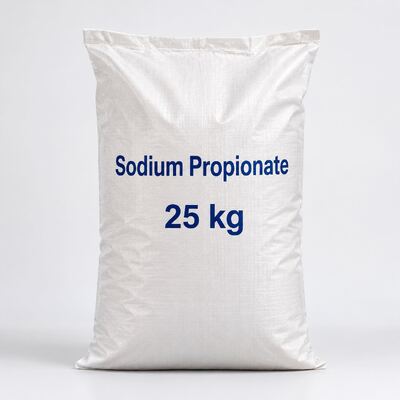
| Packaging Details: | 25kg/bag, 25kg/fiber drum, 50lb/bag, 1000kg/jumbo bag |
| Item | Standard Specification |
|---|---|
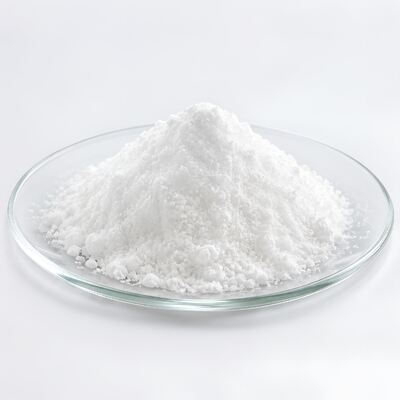
| Appearance | White crystalline powder |
| Assay (dry basis) | ≥ 99.0 % |
| Loss on Drying | ≤ 1.0 % |
| Water Insoluble Matter | ≤ 0.1 % |
| pH (10% solution) | 8.0 – 10.0 |
| Heavy metals (as Pb) | ≤ 10 ppm |
| Arsenic (As) | ≤ 3 ppm |
| Iron | ≤ 30 ppm |
Formulation Uses: This raw material is shown for bread, cakes, pastries, cheese, dairy products, tobacco, animal feed, topical cream, and pharmaceutical tablet applications.
99% Food Grade Purity: Meets food additive specifications with assay ≥99.0% on dry basis, suitable for direct use in bakery and dairy preservation.
Effective Antifungal Action: Inhibits mold and rope bacteria in baked goods, extending shelf life without affecting yeast fermentation in most dough systems.
Hygroscopic Free-Flowing Powder: White crystalline powder with good solubility in water, easy to dissolve and disperse in dough formulations and brine systems.
Multi-Grade Availability: Food grade, feed grade and industrial grade sodium propionate available from a single supply source.
5,000 MT Annual Capacity: Reliable bulk production capacity supported by regular stock, suitable for large food manufacturer and trading company orders.
Sodium propionate (CAS 137-40-6), chemically known as sodium propanoate, is the sodium salt of propionic acid with the molecular formula C3H5NaO2 and molecular weight of 96.06 g/mol. It is a white crystalline, hygroscopic powder with a faint characteristic odor, classified as food additive E281. As an antifungal preservative, sodium propionate releases propionic acid in acidic food environments, effectively inhibiting mold, rope bacilli and certain bacteria. Chemfine supplies food, feed and industrial grade sodium propionate for bakery, dairy, tobacco and feed preservation applications.
Its primary application is in baked goods such as bread, cakes, pastries and tortillas, where it prevents mold growth and rope formation caused by Bacillus mesentericus, extending shelf life from days to weeks. Unlike calcium propionate, sodium propionate does not react with other dough ingredients or affect calcium-fortified products, making it preferred in dairy-based and non-calcium-sensitive formulations. In cheese and processed dairy, it inhibits surface mold and yeasts. It is also used in tobacco, animal feed, topical pharmaceuticals and cosmetic creams as a broad-spectrum antifungal preservative.
Chemfine supplies sodium propionate in 25kg bags, 25kg fiber drums, 50lb US-market bags and 1000kg jumbo bags, with an annual production capacity of 5,000 MT. The product is supported by complete food safety documentation including assay, loss on drying, pH, heavy metals and arsenic testing. Technical grades and packaging can be matched to existing bakery, dairy, feed and pharmaceutical formulation requirements.
Bread & Baked Goods: Primary preservative in sliced bread, wraps, tortillas and cakes to prevent mold and rope formation.
Cheese & Dairy: Surface mold inhibitor in processed cheese, cream fillings and dairy-based desserts.
Animal Feed & Pet Food: Antifungal preservative in complete feed, hay and silage to prevent mold during storage.
Tobacco Processing: Used as a moisture regulator and mold inhibitor in tobacco products.
Pharmaceuticals & Cosmetics: Preservative in topical creams, ointments and tablet formulations.
Typical use levels range from 0.2% to 0.4% of flour weight in bread and cake applications, depending on desired shelf life and regional regulations. Always confirm limits with local food additive regulations.
Sodium propionate is more water-soluble and does not form insoluble calcium complexes. Calcium propionate is preferred in standard bread where calcium fortification is acceptable, while sodium propionate is used in dairy, cream and non-calcium-sensitive recipes.
At normal use levels, sodium propionate does not inhibit baker's yeast (Saccharomyces cerevisiae), which is why it is preferred in yeast-leavened baked goods. It primarily targets molds and rope bacteria.
We offer 25kg/bag, 25kg/fiber drum, 50lb/bag and 1000kg/jumbo bag. Bulk orders can be loaded by 20' or 40' container.
Under recommended cool, dry and sealed storage conditions, the shelf life is 24 months from the date of manufacture. Sodium propionate is hygroscopic and must be protected from moisture.