logo
Good price  online

products details

Home > Products >
Food Additives
>
D-Maltose Monohydrate CAS 6363-53-7

D-Maltose Monohydrate CAS 6363-53-7

Brand Name: Chemfine
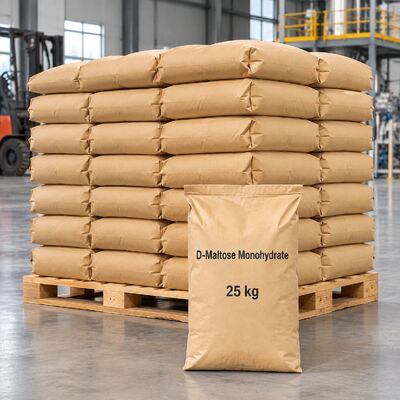
Packaging Details: 25kg/bag (multi-wall kraft paper bag with PE inner liner)
Detail Information
Place of Origin:
China
Chemical Name:
D-Maltose Monohydrate (4-O-alpha-D-glucopyranosyl-D-glucose)
Common Name:
Maltose; D-(+)-Maltose; Malt Sugar; Maltose Monohydrate
CAS Number:
6363-53-7
EINECS/EC Number:
200-716-5
Molecular Formula:
C12H22O11·H2O (= C12H24O12)
Appearance:
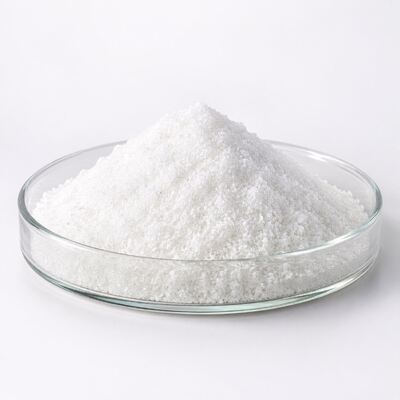
White Crystalline Powder Or Crystals
Chemical Classification:
Disaccharide Carbohydrate / Sugar
Chemical Type:
Alpha-1,4 Linked Glucose Disaccharide Monohydrate
Core Functions:
Sweetener; Excipient; Carbon Source; Humectant; Coating Agent; Fermentation Substrate
Main Applications:
Confectionery; Bakery; Pharmaceutical Excipient; Fermentation; Nutritional Supplements; Cosmetics
Available Grades:
Food Grade; Pharmaceutical Grade; Research / Lab Grade
Delivery Time:
7 – 15 Working Days After Order Confirmation
Supply Ability:
8,000 MT/year
Highlight:

D-Maltose Monohydrate CAS 6363-53-7

,

Maltose Monohydrate food additive

,

D-Maltose Monohydrate sweetener

Product Description
Certificate of Analysis (COA)
Item Standard Specification
Appearance White crystalline powder
Assay (dry basis) ≥ 99.0 %
Loss on Drying 4.5 – 6.5 %
Specific Rotation +128° to +130°
pH (10% solution) 4.0 – 6.5
Chloride ≤ 0.01 %
Sulphated Ash ≤ 0.1 %
Heavy metals (as Pb) ≤ 10 ppm
Arsenic (As) ≤ 3 ppm
Product Selling Points

Formulation Uses: This raw material is shown for hard candy, toffee, bakery products, infant formula, tablet excipient, lyophilized injectable, fermentation carbon source, and cosmetic humectant applications.

99% High Purity Crystalline Maltose: Food grade assay ≥99.0% with tight specific rotation control, suitable for direct food, beverage and pharmaceutical excipient use.

Low Sweetness & Mild Taste: Approximately 30-40% of the sweetness of sucrose, providing mild sweetness, good humectancy and low cariogenicity.

Excellent Solubility & Stability: Freely soluble in water with good thermal stability, suitable for high-temperature candy processing and sterilization.

Multi-Grade Coverage: Food grade, pharmaceutical grade and research grade available, covering confectionery, pharma and biotech fermentation needs.

8,000 MT Annual Capacity: Reliable bulk production with regular stock, supported by standard 25kg/bag international trade packaging.

Product Introduction

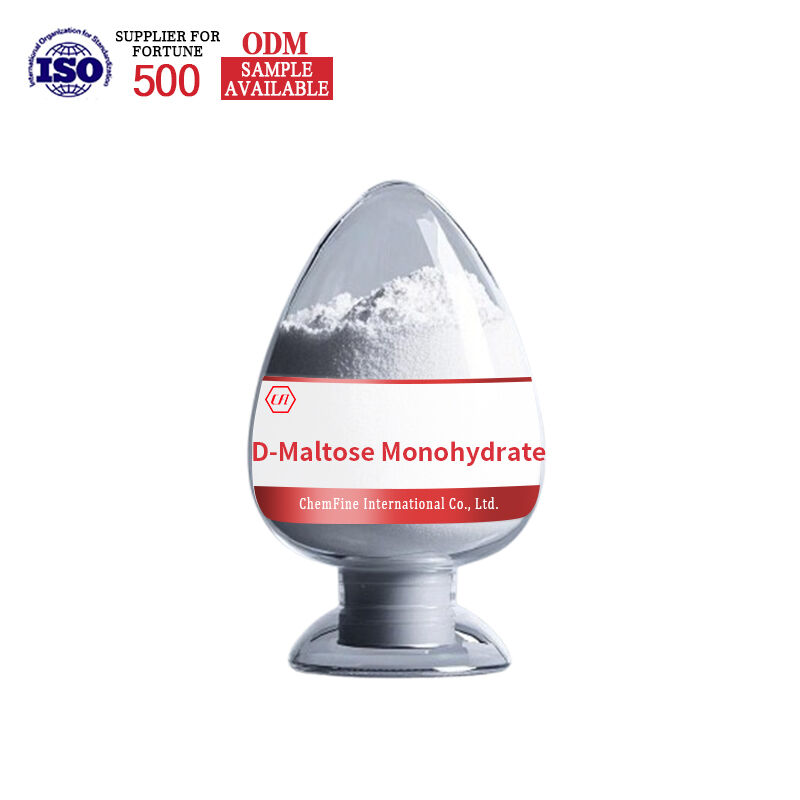
D-Maltose monohydrate (CAS 6363-53-7), chemically known as 4-O-alpha-D-glucopyranosyl-D-glucose monohydrate, is a disaccharide sugar composed of two glucose units linked by an alpha-1,4 glycosidic bond. With the molecular formula C12H22O11·H2O and molecular weight of 360.31 g/mol, it appears as a white crystalline powder with a mild, clean sweet taste. Maltose is produced by enzymatic hydrolysis of starch and is widely used as a sweetener, excipient and fermentation substrate across food, pharmaceutical and biotechnology industries. Chemfine supplies food, pharmaceutical and research grade D-maltose monohydrate in bulk for diverse formulation applications.

Its primary food application is in confectionery, where maltose's low crystallization tendency, good humectancy and mild sweetness make it ideal for hard candy, toffee, caramel and chocolate coatings. It is also used in infant nutrition, baked goods, jams and fruit preserves as a sucrose alternative with lower cariogenicity. In pharmaceuticals, maltose monohydrate serves as a tablet excipient, lyophilization substrate and isotonic agent in injectable solutions, valued for its low reducing sugar content and stable solubility. In biotechnology, it is used as a carbon source in microbial fermentation and cell culture media. In cosmetics, it acts as a humectant and skin-conditioning agent.

Chemfine supplies D-maltose monohydrate in standard 25kg multi-wall kraft paper bags with PE inner liner, loaded by the container for international trade. With an annual production capacity of 8,000 MT, the product is supported by complete quality documentation including assay, specific rotation, loss on drying, pH and heavy metal testing. Technical grades can be matched to existing confectionery, pharmaceutical and fermentation formulation requirements.

Key Features
  • ≥99.0% assay, food / pharma grade
  • White crystalline powder, freely soluble in water
  • Melting point 102-106°C
  • Specific rotation +128° to +130°
  • Low sweetness (~30-40% of sucrose)
  • 24-month shelf life under dry storage
  • Standard 25kg/bag international trade packaging
Industries Served
  • Confectionery & Candy Manufacturing
  • Bakery & Dairy Products
  • Pharmaceutical Excipients & Injectables
  • Fermentation & Biotechnology
  • Infant & Clinical Nutrition
  • Cosmetics & Personal Care
Core Application Scenarios

D-Maltose Monohydrate CAS 6363-53-7

Hard Candy & Confectionery: Low-crystallization sweetener for hard candy, toffee, caramel and chocolate with good humectancy and shelf stability.

Pharmaceutical Excipient: Tablet diluent, binder and lyophilization substrate for oral solid dosage forms and injectable isotonic solutions.

Fermentation & Cell Culture: Carbon source in microbial fermentation, enzyme production and mammalian cell culture media.

Infant & Clinical Nutrition: Carbohydrate source in infant formula, enteral nutrition and medical food products.

Cosmetics & Bakery: Humectant and skin-conditioning agent in personal care, and sweetener/humectant in baked goods.

Technical FAQ
  1. What is the difference between maltose monohydrate and anhydrous maltose?

Maltose monohydrate contains one water molecule of crystallization (approximately 5% by weight), while anhydrous maltose has no water. Monohydrate is the standard commercial crystalline form; anhydrous is used in specialized pharmaceutical and lyophilization applications.

  1. How sweet is maltose compared to sucrose?

Maltose has approximately 30-40% of the sweetness intensity of sucrose, providing a mild, clean sweet taste without the cloying flavor of sucrose.

  1. Is maltose suitable for diabetic products?

Maltose is still a carbohydrate and is metabolized to glucose. It is not considered a non-caloric sweetener and is not suitable for diabetic diets in significant quantities without medical guidance.

  1. What is the standard packaging?

Standard international trade packaging is 25kg multi-wall kraft paper bag with PE inner liner, loaded by 20' or 40' container.

  1. What is the shelf life?

Under recommended cool, dry and sealed storage conditions, the shelf life is 24 months from the date of manufacture.

Good price  online

Products Details

Home > Products >
Food Additives
>
D-Maltose Monohydrate CAS 6363-53-7

D-Maltose Monohydrate CAS 6363-53-7

Brand Name: Chemfine
Packaging Details: 25kg/bag (multi-wall kraft paper bag with PE inner liner)
Detail Information
Place of Origin:
China
Brand Name:
Chemfine
Chemical Name:
D-Maltose Monohydrate (4-O-alpha-D-glucopyranosyl-D-glucose)
Common Name:
Maltose; D-(+)-Maltose; Malt Sugar; Maltose Monohydrate
CAS Number:
6363-53-7
EINECS/EC Number:
200-716-5
Molecular Formula:
C12H22O11·H2O (= C12H24O12)
Appearance:
White Crystalline Powder Or Crystals
Chemical Classification:
Disaccharide Carbohydrate / Sugar
Chemical Type:
Alpha-1,4 Linked Glucose Disaccharide Monohydrate
Core Functions:
Sweetener; Excipient; Carbon Source; Humectant; Coating Agent; Fermentation Substrate
Main Applications:
Confectionery; Bakery; Pharmaceutical Excipient; Fermentation; Nutritional Supplements; Cosmetics
Available Grades:
Food Grade; Pharmaceutical Grade; Research / Lab Grade
Delivery Time:
7 – 15 Working Days After Order Confirmation
Packaging Details:
25kg/bag (multi-wall kraft paper bag with PE inner liner)
Delivery Time:
7 – 15 working days after order confirmation
Supply Ability:
8,000 MT/year
Highlight:

D-Maltose Monohydrate CAS 6363-53-7

,

Maltose Monohydrate food additive

,

D-Maltose Monohydrate sweetener

Product Description
Certificate of Analysis (COA)
Item Standard Specification
Appearance White crystalline powder
Assay (dry basis) ≥ 99.0 %
Loss on Drying 4.5 – 6.5 %
Specific Rotation +128° to +130°
pH (10% solution) 4.0 – 6.5
Chloride ≤ 0.01 %
Sulphated Ash ≤ 0.1 %
Heavy metals (as Pb) ≤ 10 ppm
Arsenic (As) ≤ 3 ppm
Product Selling Points

Formulation Uses: This raw material is shown for hard candy, toffee, bakery products, infant formula, tablet excipient, lyophilized injectable, fermentation carbon source, and cosmetic humectant applications.

99% High Purity Crystalline Maltose: Food grade assay ≥99.0% with tight specific rotation control, suitable for direct food, beverage and pharmaceutical excipient use.

Low Sweetness & Mild Taste: Approximately 30-40% of the sweetness of sucrose, providing mild sweetness, good humectancy and low cariogenicity.

Excellent Solubility & Stability: Freely soluble in water with good thermal stability, suitable for high-temperature candy processing and sterilization.

Multi-Grade Coverage: Food grade, pharmaceutical grade and research grade available, covering confectionery, pharma and biotech fermentation needs.

8,000 MT Annual Capacity: Reliable bulk production with regular stock, supported by standard 25kg/bag international trade packaging.

Product Introduction

D-Maltose monohydrate (CAS 6363-53-7), chemically known as 4-O-alpha-D-glucopyranosyl-D-glucose monohydrate, is a disaccharide sugar composed of two glucose units linked by an alpha-1,4 glycosidic bond. With the molecular formula C12H22O11·H2O and molecular weight of 360.31 g/mol, it appears as a white crystalline powder with a mild, clean sweet taste. Maltose is produced by enzymatic hydrolysis of starch and is widely used as a sweetener, excipient and fermentation substrate across food, pharmaceutical and biotechnology industries. Chemfine supplies food, pharmaceutical and research grade D-maltose monohydrate in bulk for diverse formulation applications.

Its primary food application is in confectionery, where maltose's low crystallization tendency, good humectancy and mild sweetness make it ideal for hard candy, toffee, caramel and chocolate coatings. It is also used in infant nutrition, baked goods, jams and fruit preserves as a sucrose alternative with lower cariogenicity. In pharmaceuticals, maltose monohydrate serves as a tablet excipient, lyophilization substrate and isotonic agent in injectable solutions, valued for its low reducing sugar content and stable solubility. In biotechnology, it is used as a carbon source in microbial fermentation and cell culture media. In cosmetics, it acts as a humectant and skin-conditioning agent.

Chemfine supplies D-maltose monohydrate in standard 25kg multi-wall kraft paper bags with PE inner liner, loaded by the container for international trade. With an annual production capacity of 8,000 MT, the product is supported by complete quality documentation including assay, specific rotation, loss on drying, pH and heavy metal testing. Technical grades can be matched to existing confectionery, pharmaceutical and fermentation formulation requirements.

Key Features
  • ≥99.0% assay, food / pharma grade
  • White crystalline powder, freely soluble in water
  • Melting point 102-106°C
  • Specific rotation +128° to +130°
  • Low sweetness (~30-40% of sucrose)
  • 24-month shelf life under dry storage
  • Standard 25kg/bag international trade packaging
Industries Served
  • Confectionery & Candy Manufacturing
  • Bakery & Dairy Products
  • Pharmaceutical Excipients & Injectables
  • Fermentation & Biotechnology
  • Infant & Clinical Nutrition
  • Cosmetics & Personal Care
Core Application Scenarios

D-Maltose Monohydrate CAS 6363-53-7

Hard Candy & Confectionery: Low-crystallization sweetener for hard candy, toffee, caramel and chocolate with good humectancy and shelf stability.

Pharmaceutical Excipient: Tablet diluent, binder and lyophilization substrate for oral solid dosage forms and injectable isotonic solutions.

Fermentation & Cell Culture: Carbon source in microbial fermentation, enzyme production and mammalian cell culture media.

Infant & Clinical Nutrition: Carbohydrate source in infant formula, enteral nutrition and medical food products.

Cosmetics & Bakery: Humectant and skin-conditioning agent in personal care, and sweetener/humectant in baked goods.

Technical FAQ
  1. What is the difference between maltose monohydrate and anhydrous maltose?

Maltose monohydrate contains one water molecule of crystallization (approximately 5% by weight), while anhydrous maltose has no water. Monohydrate is the standard commercial crystalline form; anhydrous is used in specialized pharmaceutical and lyophilization applications.

  1. How sweet is maltose compared to sucrose?

Maltose has approximately 30-40% of the sweetness intensity of sucrose, providing a mild, clean sweet taste without the cloying flavor of sucrose.

  1. Is maltose suitable for diabetic products?

Maltose is still a carbohydrate and is metabolized to glucose. It is not considered a non-caloric sweetener and is not suitable for diabetic diets in significant quantities without medical guidance.

  1. What is the standard packaging?

Standard international trade packaging is 25kg multi-wall kraft paper bag with PE inner liner, loaded by 20' or 40' container.

  1. What is the shelf life?

Under recommended cool, dry and sealed storage conditions, the shelf life is 24 months from the date of manufacture.