logo
Good price  online

products details

Home > Products >
Miscellaneous Chemical
>
PMMA Granules Resin CAS 25188-98-1 Polymethyl Methacrylate

PMMA Granules Resin CAS 25188-98-1 Polymethyl Methacrylate

Brand Name: Chemfine
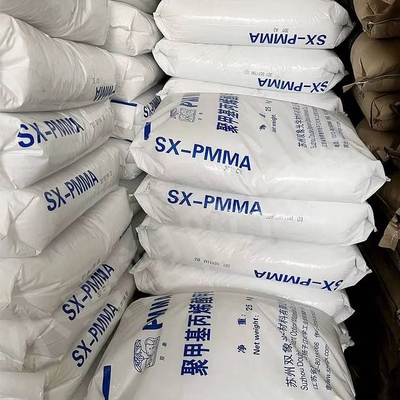
Packaging Details: 25kg kraft paper bag with inner PE liner; 1000kg big bag; customized packaging available upon request
Detail Information
Place of Origin:
China
Certification:
ISO
CAS Number:
25188-98-1
Chemical Name:
Polymethyl Methacrylate (PMMA)
Common Name:
PMMA Resin, Acrylic Resin, Organic Glass
Product Type:
Amorphous Thermoplastic Engineering Plastic
Appearance:
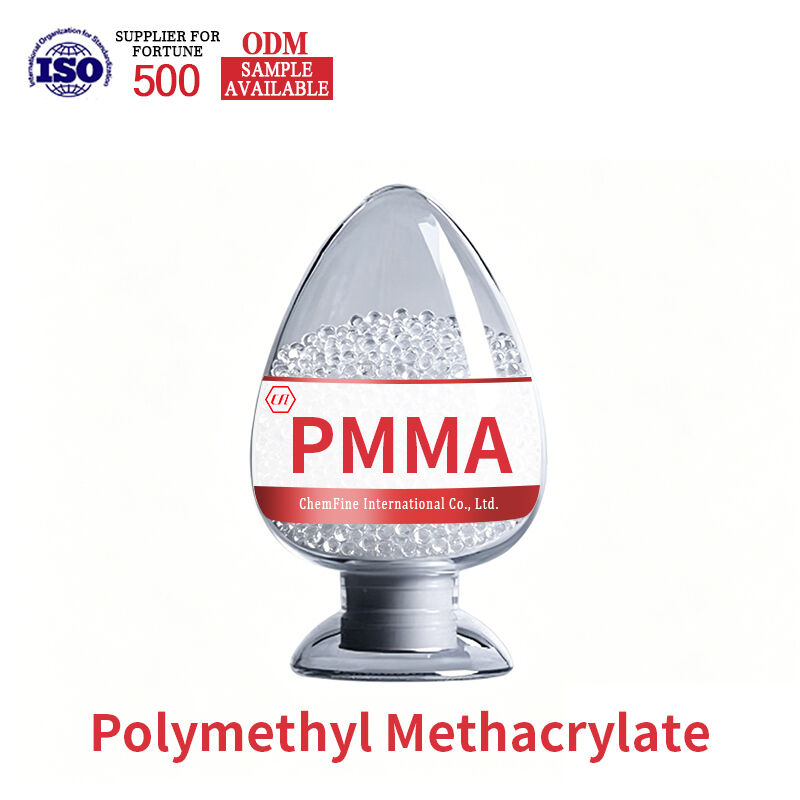
Clear Transparent Cylindrical Granules
Core Functions:
High Transparency, Weather Resistance, Easy Processing, Dimensional Stability
Processing Methods:
Injection Molding, Extrusion, Blow Molding, Thermoforming
Shelf Life:
24 Months Under Sealed Cool Dry Storage
Main Applications:
Optical Display, Automotive Parts, Construction Sheets, Household Products, Medical Devices, Electronic Appliances
Supply Ability:
50,000 Metric Tons per year
Highlight:

PMMA granules resin CAS 25188-98-1

,

Polymethyl methacrylate resin granules

,

PMMA resin with CAS number

Product Description
Product Selling Points
  • Ultra-high 92% light transmittance: Excellent optical performance comparable to glass, with high clarity and low haze, far better than most transparent plastics. Ideal for optical lenses, light guide plates and transparent display parts.
  • Outstanding long-term weather resistance: Excellent UV resistance and outdoor aging resistance. No yellowing, no chalking and no obvious performance degradation after long-term outdoor exposure, service life up to 10 years outdoors, perfect for construction decoration and outdoor signage.
  • Wide grade range for all processes: Covers general injection, high flow injection, sheet extrusion, optical, high impact and food contact grades, adapts to different processing technologies and product performance requirements.
  • Excellent thermoplastic processability: Good fluidity and molding stability, can be processed by injection molding, extrusion, blow molding and thermoforming, easy to color and secondary process, high production efficiency.
  • Good balanced mechanical properties: High surface hardness, good rigidity and certain toughness, good scratch resistance, stable dimensional performance, not easy to deform under normal use conditions.
  • Food contact safe grade available: Food contact grade complies with global mainstream food contact material standards, non-toxic and odorless, safe for tableware, food containers and kitchenware products.
  • Excellent electrical insulation: Good dielectric property, stable insulation performance under wide temperature and frequency range, suitable for electronic and electrical insulating parts and instrument housings.
  • Rich color customization: Can be customized with various transparent, translucent and opaque colors according to customer requirements, with bright color and good color fastness, meets diversified appearance design needs.
  • Lightweight alternative to glass: Density only about 1.19 g/cm³, half the weight of inorganic glass. Reduces product weight while maintaining high transparency, improves portability and reduces transportation cost.
  • Mature large-scale production stable supply: Advanced continuous polymerization process, strict quality control system, annual output of 50,000 tons, stable batch quality, supports long-term stable supply for large downstream manufacturers.

Certificate of Analysis (Typical COA)
Product Name: Polymethyl Methacrylate (PMMA) Granules Resin
CAS No.: 25188-98-1
Item Typical Specification
Appearance Clear transparent uniform granules
Melt Flow Rate Subject to specific grade
Density 1.18 - 1.20 g/cm³
Light Transmittance ≥92 %
Tensile Strength ≥70 MPa
Heat Deflection Temperature ≥85 ℃
Moisture Content ≤0.1 %
Ash Content ≤0.05 %
CONCLUSION Conforms to Standard

Product Introduction

Polymethyl Methacrylate (commonly abbreviated as PMMA, CAS 25188-98-1) is a classic amorphous thermoplastic acrylic resin, widely known as acrylic or organic glass.

With 92% ultra-high light transmittance, excellent weather resistance and good comprehensive mechanical properties, PMMA is the most cost-effective high-transparent thermoplastic in industry. It can be processed by injection molding, extrusion, blow molding and other conventional thermoplastic processes, with high molding efficiency and good secondary processability. The product provides a full grade matrix covering general purpose, optical, high flow, extrusion, high impact and food contact grades. It is widely used in optical display, automotive lamp and interior parts, construction decoration sheets, advertising signage, household products, medical devices and electronic appliances, and is one of the most widely used transparent polymer materials.


Synonyms
  • Polymethyl Methacrylate Resin
  • Acrylic PMMA Granules / Pellets
  • Poly(methyl methacrylate)
  • CAS 25188-98-1
  • Organic Glass Resin
  • Acrylic Glass Thermoplastic
  • PMMA Acrylic Polymer
  • Plexiglass Resin

Core Application Scenarios (Ranked by Importance)
  1. Construction & Advertising Decoration (Largest Volume Application): Extrusion grade PMMA is widely used to produce acrylic sheets, which are processed into advertising light boxes, signage, decorative panels, daylighting roofs, partition walls and sound insulation barriers. Its excellent weather resistance ensures no yellowing after long-term outdoor use, and high transparency brings good visual effect, which is the most classic application of PMMA.

  2. Optical Display & Electronic Components: Optical grade PMMA is the core material for LCD light guide plates, backlight modules, optical lenses, display covers and conductive films. Its high transmittance, low haze and good light guiding performance ensure uniform and soft light output, and it is easy to be precision molded, which is widely used in consumer electronics and display industry.

  3. Automotive Industry: High impact and weather resistant PMMA is used to manufacture automotive headlamp lenses, taillight covers, interior decorative parts, instrument panels and sun visors. It meets the requirements of automotive parts for high transparency, weather resistance, impact resistance and dimensional stability, and realizes lightweight design while ensuring optical performance.

  4. Household & Daily Consumer Goods: General injection grade PMMA is used to produce various household products such as transparent tableware, food containers, storage boxes, bathroom accessories, stationery and cosmetic packaging. Food contact grade is safe and non-toxic, with beautiful appearance and easy cleaning, which is deeply loved by consumers.

  5. Medical & Healthcare Equipment: Medical grade PMMA is used to manufacture medical device housings, dental restoration materials, orthopedic braces, medical test tubes and eye drop bottles. It has good biocompatibility, easy disinfection and sterilization, and good transparency for easy observation, which meets the hygiene and safety requirements of medical industry.

  6. Industrial Instruments & Electrical Appliances: Used in industrial field to produce instrument housings, equipment observation windows, electrical insulating parts, meter covers and protective covers. It has excellent electrical insulation, dimensional stability and corrosion resistance, and transparent design can realize visual observation of internal operation, which is widely used in industrial automation and electrical industry.


Technical FAQ
Q1: What is the core difference between PMMA and PC (polycarbonate) transparent plastics?

A1: PMMA has higher light transmittance (92% vs 88% of PC), better weather resistance and scratch resistance, lower cost, but lower impact resistance and heat resistance. PC has far better impact strength and higher heat distortion temperature, but is more expensive and prone to yellowing under long-term UV exposure. PMMA is suitable for outdoor scenarios and general transparent parts with cost priority, while PC is suitable for high-impact and high-temperature resistant transparent structural parts.

Q2: How to select the appropriate PMMA grade for different processing methods?

A2: For injection molding of small and simple parts, choose medium MFR general grade; for injection molding of large and complex thin-wall parts, choose high MFR high flow grade; for extrusion of sheets, pipes and profiles, choose low MFR extrusion grade with good melt strength; for optical lenses and light guide plates, choose low-haze high-transparency optical grade; for products requiring high impact resistance, choose high impact modified grade.

Q3: How is the outdoor weather resistance of PMMA?

A3: PMMA has excellent weather resistance, which is one of the best among general transparent plastics. After 10 years of natural outdoor exposure, the light transmittance drop is less than 10%, and there is no obvious yellowing and chalking. Weather resistant grade with UV stabilizer has better anti-aging performance, which is very suitable for outdoor construction, signage and automotive lamp applications.

Q4: What precautions should be taken during PMMA processing?

A4: First, PMMA is easy to absorb moisture, so it must be dried at 80-90℃ for 4-6 hours before processing to avoid silver streaks and bubbles on the product surface. Second, the processing temperature should be controlled within 180-250℃, avoid long-term residence at too high temperature to prevent thermal degradation and yellowing. Third, the mold temperature is recommended to be 40-80℃ to improve product surface finish and dimensional stability.

Q5: Is PMMA safe for food contact applications?

A5: Food contact grade PMMA complies with FDA, LFGB and other global mainstream food contact material standards. It is non-toxic, odorless and has good chemical stability to common food, and can be safely used in tableware, food containers, food packaging and other products. General industrial grade is not recommended for direct food contact, please confirm the product grade before use.

Q6: Can PMMA products be secondary processed?

A6: Yes. PMMA has good secondary processability, and can be cut, polished, engraved, bonded, thermoformed, screen printed and vacuum plated. Polishing can restore high transparency after cutting, and adhesive bonding can realize complex structure assembly, which brings great flexibility for product design and post-processing.

Good price  online

Products Details

Home > Products >
Miscellaneous Chemical
>
PMMA Granules Resin CAS 25188-98-1 Polymethyl Methacrylate

PMMA Granules Resin CAS 25188-98-1 Polymethyl Methacrylate

Brand Name: Chemfine
Packaging Details: 25kg kraft paper bag with inner PE liner; 1000kg big bag; customized packaging available upon request
Detail Information
Place of Origin:
China
Brand Name:
Chemfine
Certification:
ISO
CAS Number:
25188-98-1
Chemical Name:
Polymethyl Methacrylate (PMMA)
Common Name:
PMMA Resin, Acrylic Resin, Organic Glass
Product Type:
Amorphous Thermoplastic Engineering Plastic
Appearance:
Clear Transparent Cylindrical Granules
Core Functions:
High Transparency, Weather Resistance, Easy Processing, Dimensional Stability
Processing Methods:
Injection Molding, Extrusion, Blow Molding, Thermoforming
Shelf Life:
24 Months Under Sealed Cool Dry Storage
Main Applications:
Optical Display, Automotive Parts, Construction Sheets, Household Products, Medical Devices, Electronic Appliances
Packaging Details:
25kg kraft paper bag with inner PE liner; 1000kg big bag; customized packaging available upon request
Supply Ability:
50,000 Metric Tons per year
Highlight:

PMMA granules resin CAS 25188-98-1

,

Polymethyl methacrylate resin granules

,

PMMA resin with CAS number

Product Description
Product Selling Points
  • Ultra-high 92% light transmittance: Excellent optical performance comparable to glass, with high clarity and low haze, far better than most transparent plastics. Ideal for optical lenses, light guide plates and transparent display parts.
  • Outstanding long-term weather resistance: Excellent UV resistance and outdoor aging resistance. No yellowing, no chalking and no obvious performance degradation after long-term outdoor exposure, service life up to 10 years outdoors, perfect for construction decoration and outdoor signage.
  • Wide grade range for all processes: Covers general injection, high flow injection, sheet extrusion, optical, high impact and food contact grades, adapts to different processing technologies and product performance requirements.
  • Excellent thermoplastic processability: Good fluidity and molding stability, can be processed by injection molding, extrusion, blow molding and thermoforming, easy to color and secondary process, high production efficiency.
  • Good balanced mechanical properties: High surface hardness, good rigidity and certain toughness, good scratch resistance, stable dimensional performance, not easy to deform under normal use conditions.
  • Food contact safe grade available: Food contact grade complies with global mainstream food contact material standards, non-toxic and odorless, safe for tableware, food containers and kitchenware products.
  • Excellent electrical insulation: Good dielectric property, stable insulation performance under wide temperature and frequency range, suitable for electronic and electrical insulating parts and instrument housings.
  • Rich color customization: Can be customized with various transparent, translucent and opaque colors according to customer requirements, with bright color and good color fastness, meets diversified appearance design needs.
  • Lightweight alternative to glass: Density only about 1.19 g/cm³, half the weight of inorganic glass. Reduces product weight while maintaining high transparency, improves portability and reduces transportation cost.
  • Mature large-scale production stable supply: Advanced continuous polymerization process, strict quality control system, annual output of 50,000 tons, stable batch quality, supports long-term stable supply for large downstream manufacturers.

Certificate of Analysis (Typical COA)
Product Name: Polymethyl Methacrylate (PMMA) Granules Resin
CAS No.: 25188-98-1
Item Typical Specification
Appearance Clear transparent uniform granules
Melt Flow Rate Subject to specific grade
Density 1.18 - 1.20 g/cm³
Light Transmittance ≥92 %
Tensile Strength ≥70 MPa
Heat Deflection Temperature ≥85 ℃
Moisture Content ≤0.1 %
Ash Content ≤0.05 %
CONCLUSION Conforms to Standard

Product Introduction

Polymethyl Methacrylate (commonly abbreviated as PMMA, CAS 25188-98-1) is a classic amorphous thermoplastic acrylic resin, widely known as acrylic or organic glass.

With 92% ultra-high light transmittance, excellent weather resistance and good comprehensive mechanical properties, PMMA is the most cost-effective high-transparent thermoplastic in industry. It can be processed by injection molding, extrusion, blow molding and other conventional thermoplastic processes, with high molding efficiency and good secondary processability. The product provides a full grade matrix covering general purpose, optical, high flow, extrusion, high impact and food contact grades. It is widely used in optical display, automotive lamp and interior parts, construction decoration sheets, advertising signage, household products, medical devices and electronic appliances, and is one of the most widely used transparent polymer materials.


Synonyms
  • Polymethyl Methacrylate Resin
  • Acrylic PMMA Granules / Pellets
  • Poly(methyl methacrylate)
  • CAS 25188-98-1
  • Organic Glass Resin
  • Acrylic Glass Thermoplastic
  • PMMA Acrylic Polymer
  • Plexiglass Resin

Core Application Scenarios (Ranked by Importance)
  1. Construction & Advertising Decoration (Largest Volume Application): Extrusion grade PMMA is widely used to produce acrylic sheets, which are processed into advertising light boxes, signage, decorative panels, daylighting roofs, partition walls and sound insulation barriers. Its excellent weather resistance ensures no yellowing after long-term outdoor use, and high transparency brings good visual effect, which is the most classic application of PMMA.

  2. Optical Display & Electronic Components: Optical grade PMMA is the core material for LCD light guide plates, backlight modules, optical lenses, display covers and conductive films. Its high transmittance, low haze and good light guiding performance ensure uniform and soft light output, and it is easy to be precision molded, which is widely used in consumer electronics and display industry.

  3. Automotive Industry: High impact and weather resistant PMMA is used to manufacture automotive headlamp lenses, taillight covers, interior decorative parts, instrument panels and sun visors. It meets the requirements of automotive parts for high transparency, weather resistance, impact resistance and dimensional stability, and realizes lightweight design while ensuring optical performance.

  4. Household & Daily Consumer Goods: General injection grade PMMA is used to produce various household products such as transparent tableware, food containers, storage boxes, bathroom accessories, stationery and cosmetic packaging. Food contact grade is safe and non-toxic, with beautiful appearance and easy cleaning, which is deeply loved by consumers.

  5. Medical & Healthcare Equipment: Medical grade PMMA is used to manufacture medical device housings, dental restoration materials, orthopedic braces, medical test tubes and eye drop bottles. It has good biocompatibility, easy disinfection and sterilization, and good transparency for easy observation, which meets the hygiene and safety requirements of medical industry.

  6. Industrial Instruments & Electrical Appliances: Used in industrial field to produce instrument housings, equipment observation windows, electrical insulating parts, meter covers and protective covers. It has excellent electrical insulation, dimensional stability and corrosion resistance, and transparent design can realize visual observation of internal operation, which is widely used in industrial automation and electrical industry.


Technical FAQ
Q1: What is the core difference between PMMA and PC (polycarbonate) transparent plastics?

A1: PMMA has higher light transmittance (92% vs 88% of PC), better weather resistance and scratch resistance, lower cost, but lower impact resistance and heat resistance. PC has far better impact strength and higher heat distortion temperature, but is more expensive and prone to yellowing under long-term UV exposure. PMMA is suitable for outdoor scenarios and general transparent parts with cost priority, while PC is suitable for high-impact and high-temperature resistant transparent structural parts.

Q2: How to select the appropriate PMMA grade for different processing methods?

A2: For injection molding of small and simple parts, choose medium MFR general grade; for injection molding of large and complex thin-wall parts, choose high MFR high flow grade; for extrusion of sheets, pipes and profiles, choose low MFR extrusion grade with good melt strength; for optical lenses and light guide plates, choose low-haze high-transparency optical grade; for products requiring high impact resistance, choose high impact modified grade.

Q3: How is the outdoor weather resistance of PMMA?

A3: PMMA has excellent weather resistance, which is one of the best among general transparent plastics. After 10 years of natural outdoor exposure, the light transmittance drop is less than 10%, and there is no obvious yellowing and chalking. Weather resistant grade with UV stabilizer has better anti-aging performance, which is very suitable for outdoor construction, signage and automotive lamp applications.

Q4: What precautions should be taken during PMMA processing?

A4: First, PMMA is easy to absorb moisture, so it must be dried at 80-90℃ for 4-6 hours before processing to avoid silver streaks and bubbles on the product surface. Second, the processing temperature should be controlled within 180-250℃, avoid long-term residence at too high temperature to prevent thermal degradation and yellowing. Third, the mold temperature is recommended to be 40-80℃ to improve product surface finish and dimensional stability.

Q5: Is PMMA safe for food contact applications?

A5: Food contact grade PMMA complies with FDA, LFGB and other global mainstream food contact material standards. It is non-toxic, odorless and has good chemical stability to common food, and can be safely used in tableware, food containers, food packaging and other products. General industrial grade is not recommended for direct food contact, please confirm the product grade before use.

Q6: Can PMMA products be secondary processed?

A6: Yes. PMMA has good secondary processability, and can be cut, polished, engraved, bonded, thermoformed, screen printed and vacuum plated. Polishing can restore high transparency after cutting, and adhesive bonding can realize complex structure assembly, which brings great flexibility for product design and post-processing.