logo
Good price  online

products details

Home > Products >
Miscellaneous Chemical
>
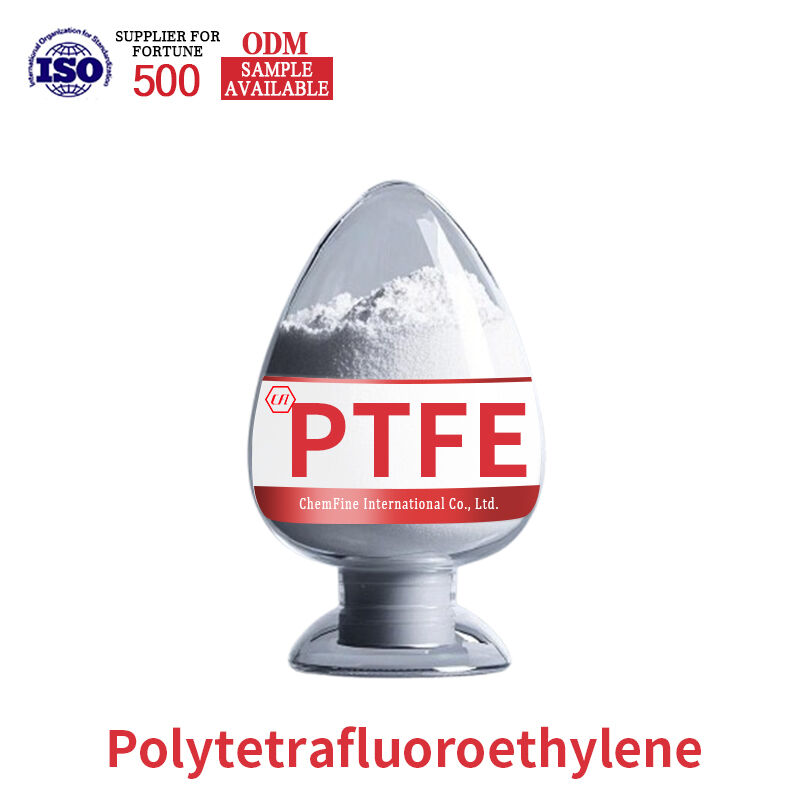
PTFE Fine Powder Resin CAS 9002-84-0 Polytetrafluoroethylene

PTFE Fine Powder Resin CAS 9002-84-0 Polytetrafluoroethylene

Brand Name: Chemfine
Packaging Details: 2,500 Metric Tons per year
Detail Information
Place of Origin:
China
Certification:
ISO
Chemical Name:
Polytetrafluoroethylene Fine Powder
Common Name:
PTFE Fine Powder, PTFE Dispersion Resin
Product Type:
Paste Extrusion Grade Fluoropolymer Resin
Appearance:
White Uniform Fine Powder
CAS Number:
9002-84-0
EINECS Number:
618-337-2
Core Functions:
Chemical Resistance, High Temperature Resistance, Electrical Insulation, Lubrication, Weather Resistance
Processing Method:
Paste Extrusion With Lubricant, Post Stretching / Sintering
Shelf Life:
24 Months Under Sealed Dry Storage At 5-19℃
Main Applications:
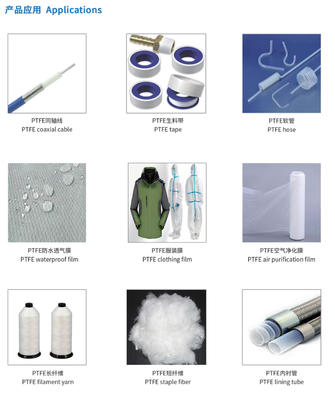
Thread Seal Tape, Wire & Cable Insulation, PTFE Tube, Biaxially Stretched Film, PTFE Fiber
Supply Ability:
20kg / 25kg plastic drum; customized packaging available upon request
Highlight:

PTFE fine powder resin

,

Polytetrafluoroethylene CAS 9002-84-0

,

PTFE resin chemical powder

Product Description
Product Selling Points
  • Premium PTFE comprehensive performance: Inherits all classic advantages of polytetrafluoroethylene: excellent chemical resistance to almost all acids, alkalis and solvents, outstanding lubricity, wide service temperature range from -200℃ to 260℃, and superior dielectric insulation performance.
  • Full grade matrix for all paste extrusion scenarios: 6 standard SF grades covering different SSG and performance, perfectly matches production of thread seal tape, coaxial cable, PTFE hose, biaxially stretched film, PTFE fiber and pressure resistant transparent tube.
  • Stable uniform particle size distribution: Average particle size controlled at 550±150μm, narrow particle size distribution, good batch consistency, ensures stable extrusion speed and uniform product performance in continuous paste extrusion production.
  • Excellent fibrillation performance for paste extrusion: Good fibrillation property under shear force, suitable for paste extrusion processing, can form uniform continuous billet, supports production of thin-wall tubes, fine wires and ultra-thin films.
  • Outstanding dielectric property for high frequency cables: Extremely low and stable dielectric constant and dielectric loss, maintains stable insulation performance under high frequency and high temperature, ideal insulating material for coaxial cables and high frequency communication wires.
  • Controllable SSG for different products: Standard specific gravity (SSG) ranges from ≤2.150 to ≥2.191, flexible selection according to product density, crystallinity and mechanical property requirements.
  • Excellent weathering & aging resistance: Outstanding UV resistance and weather resistance, no performance degradation after long-term outdoor exposure, especially suitable for outdoor waterproof breathable membranes, architectural membranes and outdoor cable products.
  • Strict production quality control: Produced by dispersion polymerization process, strict control of particle size, molecular weight and impurity content, stable batch quality, supports long-term stable supply for downstream processing manufacturers.
  • Wide downstream product form adaptability: Can be processed into tape, tube, film, fiber and other product forms through paste extrusion and post-processing, adapts to sealing, insulation, filtration, textile and other diversified application demands.
  • Standardized storage & handling guidance: Clear storage and operation specifications, provides professional guidance on temperature control, lubricant addition and extrusion process, helps customers reduce defective rate and improve production yield.
Full Grade Specification Table
Grade Average Particle Size (μm) Tensile Strength (MPa) Elongation at Break (%) Process SSG Main Applications
SF-14 550±150 30 330 Paste Extrusion ≥2.191 Seal tape, staple fiber
SF-14G 550±150 30 330 Paste Extrusion 2.151-2.190 Pipes, large size coaxial cable, staple fiber
SF-14T 550±150 32.5 330 Paste Extrusion ≤2.156 Biaxially stretched film
SF-16 550±150 32.5 330 Paste Extrusion 2.151-2.180 Filament yarn, biaxially stretched film
SF-16T 550±150 32.5 330 Paste Extrusion ≤2.150 Biaxially stretched film
SF-32 550±150 30 330 Paste Extrusion 2.145-2.170 Pressure-resistant transparent tube

Product Introduction

PTFE fine powder (polytetrafluoroethylene dispersion resin, CAS 9002-84-0) is a high-performance white fluoropolymer powder manufactured by dispersion polymerization process.

It features excellent chemical resistance, outstanding lubricity, wide service temperature range and superior dielectric performance. Unlike suspension grade PTFE, this product is specially designed for paste extrusion processing: after mixing with lubricant, it can be extruded into various shapes of billets, and then made into finished products through drying, sintering or stretching processes. The product provides a complete SF grade matrix with different SSG and mechanical properties, which is widely used in the production of PTFE thread seal tape, coaxial cable insulation, PTFE hose and lining tube, biaxially stretched waterproof breathable film, PTFE filament and staple fiber, pressure-resistant transparent tube and other products. It is one of the most core basic materials in the fluoroplastic processing industry.


Synonyms
  • Polytetrafluoroethylene Fine Powder
  • PTFE Dispersion Resin
  • Paste Extrusion Grade PTFE
  • CAS 9002-84-0
  • PTFE Fine Powder Resin
  • Poly(tetrafluoroethylene) Dispersion Powder
  • PTFE Paste Grade Resin
  • Fluoropolymer Fine Powder for Extrusion

Core Application Scenarios (Ranked by Importance)
  1. PTFE Thread Seal Tape (Largest Volume Application): SF-14 grade is specially designed for PTFE thread seal tape production. After paste extrusion and calendering, it produces soft, high lubricity seal tape, which is widely used for thread sealing of pipelines in plumbing, chemical, gas and other industries. It has good conformability, excellent chemical resistance and aging resistance, and is a classic sealing material with huge market demand.

  2. High Frequency Coaxial Cable Insulation: SF-14G and other medium SSG grades are used as insulating layer for RF coaxial cables, high frequency communication cables and data transmission cables. Its extremely low and stable dielectric loss ensures stable signal transmission under high frequency, and its high temperature resistance and weather resistance ensure long-term stable operation of cables in various environments. It is an indispensable core insulating material for 5G communication, aerospace and test instruments.

  3. PTFE Tubing & Hose Lining: Paste extruded into various specifications of PTFE hose, lining tube and pressure-resistant transparent tube. It is widely used in chemical fluid transportation, medical equipment, food processing and other fields. It has the advantages of smooth inner wall, no adhesion, corrosion resistance and high temperature resistance. SF-32 grade is specially used for pressure-resistant transparent tubes, with good transparency and pressure resistance.

  4. Biaxially Stretched PTFE Film (Fast Growing High-end Application): Low SSG grades such as SF-14T and SF-16T are used to produce biaxially stretched PTFE microporous membrane. After biaxial stretching, it forms a microporous structure with waterproof and breathable function, which is widely used in outdoor clothing waterproof breathable film, air purification filter membrane, architectural waterproof membrane, medical protective clothing film and other products. It has the characteristics of waterproof, windproof, moisture permeable and high filtration efficiency.

  5. PTFE Filament & Staple Fiber: SF-16 grade is used to produce PTFE filament yarn and staple fiber. PTFE fiber has excellent chemical corrosion resistance, high temperature resistance and weather resistance, and is widely used in industrial filter cloth, sealing packing, high-temperature filter bags, special textile fabrics and other fields. It can maintain stable performance in harsh corrosive and high-temperature environments.

  6. Other Special Processing Products: Also used to produce PTFE lining tubes for steel-lined PTFE pipes, special-shaped sealing parts and other products through paste extrusion and secondary processing, adapting to diversified anti-corrosion and sealing demands in chemical, electric power, pharmaceutical and other industries.


Technical FAQ
Q1: What is paste extrusion processing of PTFE fine powder?

A1: PTFE fine powder cannot be directly melt processed like thermoplastics due to its ultra-high molecular weight. Paste extrusion is the standard processing method: the powder is first mixed with volatile lubricant (such as naphtha) to form a paste-like material, then extruded into billet at low temperature, and then the lubricant is removed by drying, followed by sintering or stretching to obtain the final product. This method is suitable for producing long products such as tubes, rods, wires and tapes.

Q2: Why must PTFE fine powder be stored and handled below 19℃?

A2: PTFE fine powder has a crystal transition point around 19℃. Below 19℃, the powder particles are hard and have good anti-caking performance; above 19℃, the powder becomes soft and is prone to lamination and caking under pressure, which will affect the uniformity of subsequent extrusion. In addition, the powder is easy to fibrillate under shearing force, and fibrillation is irreversible. Damaged particles will cause defects in finished products. Therefore, low temperature operation can reduce the risk of premature fibrillation.

Q3: How to select the appropriate PTFE fine powder grade?

A3: Selection is mainly based on product type and performance requirements. For thread seal tape, choose high SSG grade SF-14; for large diameter tubes and coaxial cables, choose medium SSG grade SF-14G; for biaxially stretched film, choose low SSG grades SF-14T and SF-16T with better stretchability; for filament production, choose SF-16 grade; for pressure-resistant transparent tubes, choose SF-32 grade. The lower the SSG, the better the stretchability and toughness, and the higher the SSG, the higher the rigidity and density.

Q4: What is fibrillation of PTFE fine powder?

A4: Fibrillation means that PTFE fine powder particles will produce fiber-like drawing structure under the action of shear force. This property is the basis of paste extrusion forming, which enables the powder to bond into a continuous billet. However, premature fibrillation before processing will lead to powder caking and uneven extrusion, resulting in defects such as spots and cracks on the finished product. Therefore, excessive shearing and strong vibration must be avoided during storage and handling.

Q5: What storage and handling precautions should be followed?

A5: First, temperature control: store and transport at 5-19℃, avoid high temperature above 19℃ and freezing. Second, avoid shear and vibration: handle gently, do not roll the drum, avoid strong impact, to prevent premature fibrillation and caking. Third, moisture-proof: store in a dry environment, because moisture absorption will negatively affect the processing performance. Fourth, it is recommended to sieve the powder below 19℃ before adding lubricant to ensure uniform powder.

Q6: What is the difference between PTFE fine powder and suspension powder?

A6: The two have different production processes and application scenarios. Fine powder (dispersion resin) is produced by dispersion polymerization, with small particle size and good fibrillation property, suitable for paste extrusion to produce thin-wall tubes, wires, tapes and films. Suspension powder is produced by suspension polymerization, with large particle size, suitable for molding and sintering to produce thick plates, rods and large sealing parts. The two cannot be substituted for each other, and the corresponding type should be selected according to the processing technology.

Good price  online

Products Details

Home > Products >
Miscellaneous Chemical
>
PTFE Fine Powder Resin CAS 9002-84-0 Polytetrafluoroethylene

PTFE Fine Powder Resin CAS 9002-84-0 Polytetrafluoroethylene

Brand Name: Chemfine
Packaging Details: 2,500 Metric Tons per year
Detail Information
Place of Origin:
China
Brand Name:
Chemfine
Certification:
ISO
Chemical Name:
Polytetrafluoroethylene Fine Powder
Common Name:
PTFE Fine Powder, PTFE Dispersion Resin
Product Type:
Paste Extrusion Grade Fluoropolymer Resin
Appearance:
White Uniform Fine Powder
CAS Number:
9002-84-0
EINECS Number:
618-337-2
Core Functions:
Chemical Resistance, High Temperature Resistance, Electrical Insulation, Lubrication, Weather Resistance
Processing Method:
Paste Extrusion With Lubricant, Post Stretching / Sintering
Shelf Life:
24 Months Under Sealed Dry Storage At 5-19℃
Main Applications:
Thread Seal Tape, Wire & Cable Insulation, PTFE Tube, Biaxially Stretched Film, PTFE Fiber
Packaging Details:
2,500 Metric Tons per year
Supply Ability:
20kg / 25kg plastic drum; customized packaging available upon request
Highlight:

PTFE fine powder resin

,

Polytetrafluoroethylene CAS 9002-84-0

,

PTFE resin chemical powder

Product Description
Product Selling Points
  • Premium PTFE comprehensive performance: Inherits all classic advantages of polytetrafluoroethylene: excellent chemical resistance to almost all acids, alkalis and solvents, outstanding lubricity, wide service temperature range from -200℃ to 260℃, and superior dielectric insulation performance.
  • Full grade matrix for all paste extrusion scenarios: 6 standard SF grades covering different SSG and performance, perfectly matches production of thread seal tape, coaxial cable, PTFE hose, biaxially stretched film, PTFE fiber and pressure resistant transparent tube.
  • Stable uniform particle size distribution: Average particle size controlled at 550±150μm, narrow particle size distribution, good batch consistency, ensures stable extrusion speed and uniform product performance in continuous paste extrusion production.
  • Excellent fibrillation performance for paste extrusion: Good fibrillation property under shear force, suitable for paste extrusion processing, can form uniform continuous billet, supports production of thin-wall tubes, fine wires and ultra-thin films.
  • Outstanding dielectric property for high frequency cables: Extremely low and stable dielectric constant and dielectric loss, maintains stable insulation performance under high frequency and high temperature, ideal insulating material for coaxial cables and high frequency communication wires.
  • Controllable SSG for different products: Standard specific gravity (SSG) ranges from ≤2.150 to ≥2.191, flexible selection according to product density, crystallinity and mechanical property requirements.
  • Excellent weathering & aging resistance: Outstanding UV resistance and weather resistance, no performance degradation after long-term outdoor exposure, especially suitable for outdoor waterproof breathable membranes, architectural membranes and outdoor cable products.
  • Strict production quality control: Produced by dispersion polymerization process, strict control of particle size, molecular weight and impurity content, stable batch quality, supports long-term stable supply for downstream processing manufacturers.
  • Wide downstream product form adaptability: Can be processed into tape, tube, film, fiber and other product forms through paste extrusion and post-processing, adapts to sealing, insulation, filtration, textile and other diversified application demands.
  • Standardized storage & handling guidance: Clear storage and operation specifications, provides professional guidance on temperature control, lubricant addition and extrusion process, helps customers reduce defective rate and improve production yield.
Full Grade Specification Table
Grade Average Particle Size (μm) Tensile Strength (MPa) Elongation at Break (%) Process SSG Main Applications
SF-14 550±150 30 330 Paste Extrusion ≥2.191 Seal tape, staple fiber
SF-14G 550±150 30 330 Paste Extrusion 2.151-2.190 Pipes, large size coaxial cable, staple fiber
SF-14T 550±150 32.5 330 Paste Extrusion ≤2.156 Biaxially stretched film
SF-16 550±150 32.5 330 Paste Extrusion 2.151-2.180 Filament yarn, biaxially stretched film
SF-16T 550±150 32.5 330 Paste Extrusion ≤2.150 Biaxially stretched film
SF-32 550±150 30 330 Paste Extrusion 2.145-2.170 Pressure-resistant transparent tube

Product Introduction

PTFE fine powder (polytetrafluoroethylene dispersion resin, CAS 9002-84-0) is a high-performance white fluoropolymer powder manufactured by dispersion polymerization process.

It features excellent chemical resistance, outstanding lubricity, wide service temperature range and superior dielectric performance. Unlike suspension grade PTFE, this product is specially designed for paste extrusion processing: after mixing with lubricant, it can be extruded into various shapes of billets, and then made into finished products through drying, sintering or stretching processes. The product provides a complete SF grade matrix with different SSG and mechanical properties, which is widely used in the production of PTFE thread seal tape, coaxial cable insulation, PTFE hose and lining tube, biaxially stretched waterproof breathable film, PTFE filament and staple fiber, pressure-resistant transparent tube and other products. It is one of the most core basic materials in the fluoroplastic processing industry.


Synonyms
  • Polytetrafluoroethylene Fine Powder
  • PTFE Dispersion Resin
  • Paste Extrusion Grade PTFE
  • CAS 9002-84-0
  • PTFE Fine Powder Resin
  • Poly(tetrafluoroethylene) Dispersion Powder
  • PTFE Paste Grade Resin
  • Fluoropolymer Fine Powder for Extrusion

Core Application Scenarios (Ranked by Importance)
  1. PTFE Thread Seal Tape (Largest Volume Application): SF-14 grade is specially designed for PTFE thread seal tape production. After paste extrusion and calendering, it produces soft, high lubricity seal tape, which is widely used for thread sealing of pipelines in plumbing, chemical, gas and other industries. It has good conformability, excellent chemical resistance and aging resistance, and is a classic sealing material with huge market demand.

  2. High Frequency Coaxial Cable Insulation: SF-14G and other medium SSG grades are used as insulating layer for RF coaxial cables, high frequency communication cables and data transmission cables. Its extremely low and stable dielectric loss ensures stable signal transmission under high frequency, and its high temperature resistance and weather resistance ensure long-term stable operation of cables in various environments. It is an indispensable core insulating material for 5G communication, aerospace and test instruments.

  3. PTFE Tubing & Hose Lining: Paste extruded into various specifications of PTFE hose, lining tube and pressure-resistant transparent tube. It is widely used in chemical fluid transportation, medical equipment, food processing and other fields. It has the advantages of smooth inner wall, no adhesion, corrosion resistance and high temperature resistance. SF-32 grade is specially used for pressure-resistant transparent tubes, with good transparency and pressure resistance.

  4. Biaxially Stretched PTFE Film (Fast Growing High-end Application): Low SSG grades such as SF-14T and SF-16T are used to produce biaxially stretched PTFE microporous membrane. After biaxial stretching, it forms a microporous structure with waterproof and breathable function, which is widely used in outdoor clothing waterproof breathable film, air purification filter membrane, architectural waterproof membrane, medical protective clothing film and other products. It has the characteristics of waterproof, windproof, moisture permeable and high filtration efficiency.

  5. PTFE Filament & Staple Fiber: SF-16 grade is used to produce PTFE filament yarn and staple fiber. PTFE fiber has excellent chemical corrosion resistance, high temperature resistance and weather resistance, and is widely used in industrial filter cloth, sealing packing, high-temperature filter bags, special textile fabrics and other fields. It can maintain stable performance in harsh corrosive and high-temperature environments.

  6. Other Special Processing Products: Also used to produce PTFE lining tubes for steel-lined PTFE pipes, special-shaped sealing parts and other products through paste extrusion and secondary processing, adapting to diversified anti-corrosion and sealing demands in chemical, electric power, pharmaceutical and other industries.


Technical FAQ
Q1: What is paste extrusion processing of PTFE fine powder?

A1: PTFE fine powder cannot be directly melt processed like thermoplastics due to its ultra-high molecular weight. Paste extrusion is the standard processing method: the powder is first mixed with volatile lubricant (such as naphtha) to form a paste-like material, then extruded into billet at low temperature, and then the lubricant is removed by drying, followed by sintering or stretching to obtain the final product. This method is suitable for producing long products such as tubes, rods, wires and tapes.

Q2: Why must PTFE fine powder be stored and handled below 19℃?

A2: PTFE fine powder has a crystal transition point around 19℃. Below 19℃, the powder particles are hard and have good anti-caking performance; above 19℃, the powder becomes soft and is prone to lamination and caking under pressure, which will affect the uniformity of subsequent extrusion. In addition, the powder is easy to fibrillate under shearing force, and fibrillation is irreversible. Damaged particles will cause defects in finished products. Therefore, low temperature operation can reduce the risk of premature fibrillation.

Q3: How to select the appropriate PTFE fine powder grade?

A3: Selection is mainly based on product type and performance requirements. For thread seal tape, choose high SSG grade SF-14; for large diameter tubes and coaxial cables, choose medium SSG grade SF-14G; for biaxially stretched film, choose low SSG grades SF-14T and SF-16T with better stretchability; for filament production, choose SF-16 grade; for pressure-resistant transparent tubes, choose SF-32 grade. The lower the SSG, the better the stretchability and toughness, and the higher the SSG, the higher the rigidity and density.

Q4: What is fibrillation of PTFE fine powder?

A4: Fibrillation means that PTFE fine powder particles will produce fiber-like drawing structure under the action of shear force. This property is the basis of paste extrusion forming, which enables the powder to bond into a continuous billet. However, premature fibrillation before processing will lead to powder caking and uneven extrusion, resulting in defects such as spots and cracks on the finished product. Therefore, excessive shearing and strong vibration must be avoided during storage and handling.

Q5: What storage and handling precautions should be followed?

A5: First, temperature control: store and transport at 5-19℃, avoid high temperature above 19℃ and freezing. Second, avoid shear and vibration: handle gently, do not roll the drum, avoid strong impact, to prevent premature fibrillation and caking. Third, moisture-proof: store in a dry environment, because moisture absorption will negatively affect the processing performance. Fourth, it is recommended to sieve the powder below 19℃ before adding lubricant to ensure uniform powder.

Q6: What is the difference between PTFE fine powder and suspension powder?

A6: The two have different production processes and application scenarios. Fine powder (dispersion resin) is produced by dispersion polymerization, with small particle size and good fibrillation property, suitable for paste extrusion to produce thin-wall tubes, wires, tapes and films. Suspension powder is produced by suspension polymerization, with large particle size, suitable for molding and sintering to produce thick plates, rods and large sealing parts. The two cannot be substituted for each other, and the corresponding type should be selected according to the processing technology.