logo
Good price  online

products details

Home > Products >
Organic Chemistry Solvents
>
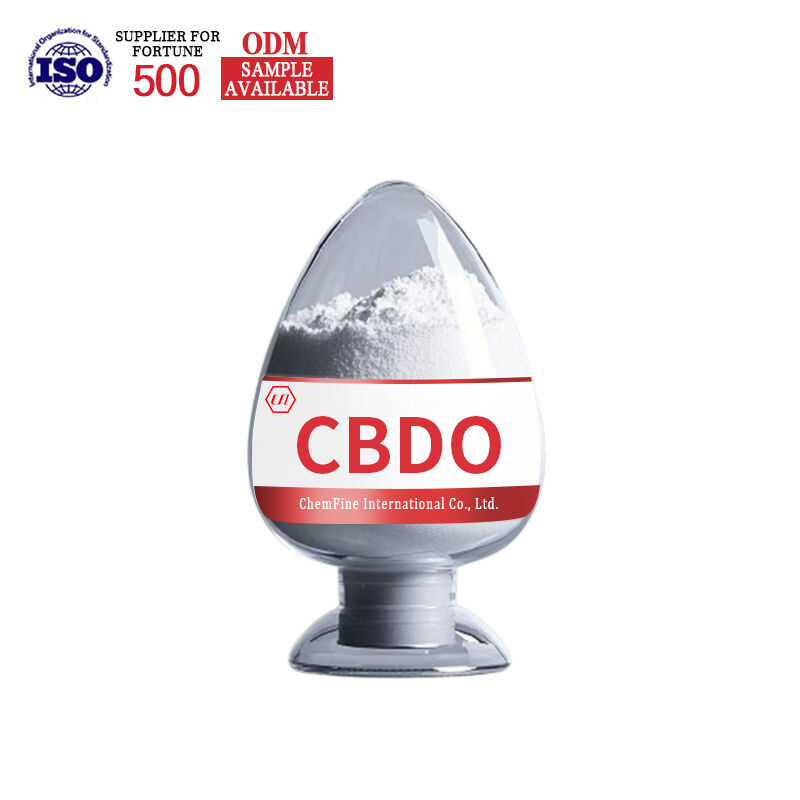
2,2,4,4-Tetramethyl-1,3-cyclobutanediol CBDO Cas 3010-96-6

2,2,4,4-Tetramethyl-1,3-cyclobutanediol CBDO Cas 3010-96-6

Brand Name: Chemfine
MOQ: 25 Kilograms
Price: USD 500 - 700 / Kilogram
Packaging Details: 25kg fiber drum with inner aluminum foil liner
Payment Terms: L/C,T/T
Detail Information
Place of Origin:
China
Certification:
ISO
Chemical Name:
2,2,4,4-Tetramethyl-1,3-cyclobutanediol
Common Name:
CBDO
CAS Number:
3010-96-6
Molecular Formula:
C8H16O2
Product Type:
Alicyclic Diol Monomer, High Performance Copolyester Raw Material
Appearance:
White Crystalline Powder
Core Functions:
Polymer Chain Rigidification, Heat Resistance Improvement, Transparency Enhancement, BPA-free Substitution
Main Applications:
High Transparency Copolyester, Specialty Coating Resin, Engineering Plastic Modification, Food Contact Polymer, Optical Grade Material, Specialty Adhesive
Product Description
Product Selling Points
  • ✅ Ultra-high purity 99.91%, far exceeding the ≥98.0% industry standard: Extremely low residual impurities, effectively reduces side reactions during polymerization, ensures uniform molecular weight distribution, and guarantees stable optical and mechanical properties of finished polymers.
  • ✅ Ultra-narrow melting point range 127.9-128.9℃, strictly within 126.0-129.0℃ specification: Narrow melting range indicates high crystallographic uniformity and excellent batch consistency, enables precise temperature control during melting processing, and fits continuous industrial polymerization production perfectly.
  • ✅ White crystalline powder with excellent appearance: No chromatic aberration and no heavy metal impurities, will not cause yellowing of polymer products, especially suitable for high-transparency optical grade and food contact polymer formulations.
  • ✅ Unique alicyclic ring structure: Tetramethyl cyclobutane skeleton endows polymers with higher glass transition temperature, outstanding thermal stability, chemical resistance and impact resistance, far superior to conventional linear diols.
  • ✅ BPA-free safe monomer: Non-toxic and environmentally friendly, does not contain bisphenol A structure. Polymers synthesized from CBDO comply with food contact material standards, suitable for infant products and food packaging applications.
  • ✅ Excellent weathering and hydrolysis resistance: The rigid alicyclic structure improves the weather resistance and hydrolysis resistance of polyester resin, extends the service life of outdoor coatings and engineering plastic products.
  • ✅ Wide formulation compatibility: Can be copolymerized with terephthalic acid, ethylene glycol, neopentyl glycol and various polybasic acids / diols, flexible to adjust polymer hardness, toughness, heat resistance and processing performance.
  • ✅ Multi-scenario application versatility: Suitable for high-performance copolyester, powder coating resin, engineering plastic modification, specialty adhesive, optical material and other high-end fields, a high value-added fine chemical monomer.
  • ✅ Strict batch quality control: Each batch is tested for full indicators including assay and melting point, accompanied by official COA, supports quality verification for import customs clearance and factory incoming inspection.
  • ✅ Stable bulk supply capacity: Mature production process, stable output and reliable quality, can support long-term stable supply for R&D and mass production of high-end polymer customers.
Item Standard Actual Test Result
Appearance White crystalline powder Conforms
Assay, % ≥98.0 99.91
Melting Point, ℃ 126.0-129.0 127.9-128.9
CONCLUSION PASS Conforms fully to standard

Product Introduction

2,2,4,4-Tetramethyl-1,3-cyclobutanediol (commonly abbreviated as CBDO, CAS 3010-96-6) is a high-performance alicyclic diol monomer with molecular formula C8H16O2, supplied as white crystalline powder.

With a unique tetramethyl-substituted cyclobutane rigid structure, CBDO is widely used as a premium functional diol for synthesizing high-performance copolyesters, specialty coatings and modified engineering plastics. It can significantly improve the heat resistance, chemical resistance, impact resistance and weather resistance of polymer materials while maintaining excellent optical transparency. As a BPA-free safe monomer, it is an ideal raw material for food contact grade transparent polymers. This grade reaches 99.91% actual purity with narrow melting point range, featuring low impurity, good batch consistency and stable quality, fully suitable for high-end polymerization and fine chemical formulation applications.


Synonyms
  • 2,2,4,4-Tetramethylcyclobutane-1,3-diol
  • CBDO
  • 1,3-Cyclobutanediol, 2,2,4,4-tetramethyl-
  • CAS 3010-96-6
  • EINECS 221-138-0
  • Alicyclic Diol Monomer
  • BPA-Free Copolyester Diol
  • High Purity Cyclobutanediol

Core Application Scenarios (Ranked by Importance)
  1. High Performance Transparent Copolyester (Core Application): The most important application field. CBDO is copolymerized with terephthalic acid and ethylene glycol to produce BPA-free high-transparency copolyester, which is widely used in food containers, water bottles, infant products, household appliances and medical device shells. It combines excellent transparency, impact resistance, heat resistance and chemical resistance, and is a premium alternative to traditional polycarbonate.
  2. Specialty Coating & Resin: Used as functional diol monomer in high-solid powder coatings, weather-resistant industrial coatings and electrophoretic coatings. It improves the hardness, gloss, weather resistance and corrosion resistance of coating film, and endows the resin with good leveling property and mechanical properties.
  3. Engineering Plastic Modification: Added to polyester, polyurethane and other engineering plastics as a modification monomer to improve the thermal deformation temperature, dimensional stability and chemical resistance of materials, suitable for manufacturing high-temperature resistant structural parts and electronic appliance housings.
  4. Optical Grade Polymer Materials: Used in the synthesis of optical grade transparent resins due to its high purity and low chroma. Applied in optical lenses, display light guide plates and optical film substrates, providing excellent light transmittance and low birefringence.
  5. Specialty Adhesive & Ink: Added in high-performance polyurethane adhesives and printing inks to improve adhesion, heat resistance and medium resistance, suitable for bonding of difficult-to-bond materials and high-temperature resistant ink formulations.
  6. Medical & Healthcare Polymers: Used to synthesize medical grade polymer materials. Its BPA-free property and good biocompatibility make it suitable for medical device shells  and dental materials that require high safety and sterilization resistance.

Technical FAQ
Q1: What core advantages does high-purity CBDO bring to polymerization production?

A1: Our CBDO reaches 99.91% actual assay, far higher than the industry standard of 98%. Ultra-low impurities can effectively reduce side reactions during polycondensation, avoid polymer yellowing and molecular weight fluctuation, ensure uniform product performance batch by batch, and greatly reduce the rejection rate of high-end polymer production. The narrow melting point range also makes melting and feeding more controllable, adapting to continuous automatic production lines.

Q2: What is the difference between CBDO and conventional diols such as neopentyl glycol and 1,4-butanediol?

A2: Conventional linear diols can only provide basic flexibility, while CBDO has a rigid tetramethyl cyclobutane alicyclic structure. It can significantly increase the glass transition temperature of polymers, improve heat resistance, chemical resistance and impact resistance at the same time, and maintain excellent optical transparency. It is the preferred monomer for manufacturing high-performance transparent copolyesters and high weather-resistant coatings.

Q3: Is CBDO suitable for food contact product applications?

A3: Yes. CBDO itself does not contain bisphenol A and other harmful structures. The copolyester synthesized from CBDO has excellent safety and complies with global mainstream food contact material standards. It has been widely used in food packaging, drinking utensils and infant products as a safe alternative to BPA-containing polycarbonate.

Q4: What storage and operation precautions should be followed?

A4: Store in original tightly sealed packaging in a cool, dry and ventilated warehouse, avoid moisture absorption and direct sunlight. The product is crystalline powder, operators should wear dust-proof masks, protective gloves and goggles to avoid inhalation of dust and long-term skin contact. Keep away from strong oxidants and open fire sources.

Q5: Can CBDO be used together with other diols and polyacids in formulation?

A5: Yes. CBDO has good reactivity and formulation compatibility. It can be copolymerized with terephthalic acid, isophthalic acid, adipic acid, ethylene glycol, neopentyl glycol and other monomers. The proportion of CBDO can be flexibly adjusted according to the target requirements of heat resistance, hardness and toughness, so as to obtain polymer materials with different performance grades.

Q6: What is the typical addition ratio in copolyester synthesis?

A6: In conventional high-transparency copolyester formulations, the molar ratio of CBDO in diol monomers is usually 10% to 50%. The higher the CBDO content, the better the heat resistance and impact resistance of the product, but the processing difficulty will also increase accordingly. The optimal ratio should be determined according to specific product performance requirements and processing technology.

Good price  online

Products Details

Home > Products >
Organic Chemistry Solvents
>
2,2,4,4-Tetramethyl-1,3-cyclobutanediol CBDO Cas 3010-96-6

2,2,4,4-Tetramethyl-1,3-cyclobutanediol CBDO Cas 3010-96-6

Brand Name: Chemfine
MOQ: 25 Kilograms
Price: USD 500 - 700 / Kilogram
Packaging Details: 25kg fiber drum with inner aluminum foil liner
Payment Terms: L/C,T/T
Detail Information
Place of Origin:
China
Brand Name:
Chemfine
Certification:
ISO
Chemical Name:
2,2,4,4-Tetramethyl-1,3-cyclobutanediol
Common Name:
CBDO
CAS Number:
3010-96-6
Molecular Formula:
C8H16O2
Product Type:
Alicyclic Diol Monomer, High Performance Copolyester Raw Material
Appearance:
White Crystalline Powder
Core Functions:
Polymer Chain Rigidification, Heat Resistance Improvement, Transparency Enhancement, BPA-free Substitution
Main Applications:
High Transparency Copolyester, Specialty Coating Resin, Engineering Plastic Modification, Food Contact Polymer, Optical Grade Material, Specialty Adhesive
Minimum Order Quantity:
25 Kilograms
Price:
USD 500 - 700 / Kilogram
Packaging Details:
25kg fiber drum with inner aluminum foil liner
Delivery Time:
7Days
Payment Terms:
L/C,T/T
Product Description
Product Selling Points
  • ✅ Ultra-high purity 99.91%, far exceeding the ≥98.0% industry standard: Extremely low residual impurities, effectively reduces side reactions during polymerization, ensures uniform molecular weight distribution, and guarantees stable optical and mechanical properties of finished polymers.
  • ✅ Ultra-narrow melting point range 127.9-128.9℃, strictly within 126.0-129.0℃ specification: Narrow melting range indicates high crystallographic uniformity and excellent batch consistency, enables precise temperature control during melting processing, and fits continuous industrial polymerization production perfectly.
  • ✅ White crystalline powder with excellent appearance: No chromatic aberration and no heavy metal impurities, will not cause yellowing of polymer products, especially suitable for high-transparency optical grade and food contact polymer formulations.
  • ✅ Unique alicyclic ring structure: Tetramethyl cyclobutane skeleton endows polymers with higher glass transition temperature, outstanding thermal stability, chemical resistance and impact resistance, far superior to conventional linear diols.
  • ✅ BPA-free safe monomer: Non-toxic and environmentally friendly, does not contain bisphenol A structure. Polymers synthesized from CBDO comply with food contact material standards, suitable for infant products and food packaging applications.
  • ✅ Excellent weathering and hydrolysis resistance: The rigid alicyclic structure improves the weather resistance and hydrolysis resistance of polyester resin, extends the service life of outdoor coatings and engineering plastic products.
  • ✅ Wide formulation compatibility: Can be copolymerized with terephthalic acid, ethylene glycol, neopentyl glycol and various polybasic acids / diols, flexible to adjust polymer hardness, toughness, heat resistance and processing performance.
  • ✅ Multi-scenario application versatility: Suitable for high-performance copolyester, powder coating resin, engineering plastic modification, specialty adhesive, optical material and other high-end fields, a high value-added fine chemical monomer.
  • ✅ Strict batch quality control: Each batch is tested for full indicators including assay and melting point, accompanied by official COA, supports quality verification for import customs clearance and factory incoming inspection.
  • ✅ Stable bulk supply capacity: Mature production process, stable output and reliable quality, can support long-term stable supply for R&D and mass production of high-end polymer customers.
Item Standard Actual Test Result
Appearance White crystalline powder Conforms
Assay, % ≥98.0 99.91
Melting Point, ℃ 126.0-129.0 127.9-128.9
CONCLUSION PASS Conforms fully to standard

Product Introduction

2,2,4,4-Tetramethyl-1,3-cyclobutanediol (commonly abbreviated as CBDO, CAS 3010-96-6) is a high-performance alicyclic diol monomer with molecular formula C8H16O2, supplied as white crystalline powder.

With a unique tetramethyl-substituted cyclobutane rigid structure, CBDO is widely used as a premium functional diol for synthesizing high-performance copolyesters, specialty coatings and modified engineering plastics. It can significantly improve the heat resistance, chemical resistance, impact resistance and weather resistance of polymer materials while maintaining excellent optical transparency. As a BPA-free safe monomer, it is an ideal raw material for food contact grade transparent polymers. This grade reaches 99.91% actual purity with narrow melting point range, featuring low impurity, good batch consistency and stable quality, fully suitable for high-end polymerization and fine chemical formulation applications.


Synonyms
  • 2,2,4,4-Tetramethylcyclobutane-1,3-diol
  • CBDO
  • 1,3-Cyclobutanediol, 2,2,4,4-tetramethyl-
  • CAS 3010-96-6
  • EINECS 221-138-0
  • Alicyclic Diol Monomer
  • BPA-Free Copolyester Diol
  • High Purity Cyclobutanediol

Core Application Scenarios (Ranked by Importance)
  1. High Performance Transparent Copolyester (Core Application): The most important application field. CBDO is copolymerized with terephthalic acid and ethylene glycol to produce BPA-free high-transparency copolyester, which is widely used in food containers, water bottles, infant products, household appliances and medical device shells. It combines excellent transparency, impact resistance, heat resistance and chemical resistance, and is a premium alternative to traditional polycarbonate.
  2. Specialty Coating & Resin: Used as functional diol monomer in high-solid powder coatings, weather-resistant industrial coatings and electrophoretic coatings. It improves the hardness, gloss, weather resistance and corrosion resistance of coating film, and endows the resin with good leveling property and mechanical properties.
  3. Engineering Plastic Modification: Added to polyester, polyurethane and other engineering plastics as a modification monomer to improve the thermal deformation temperature, dimensional stability and chemical resistance of materials, suitable for manufacturing high-temperature resistant structural parts and electronic appliance housings.
  4. Optical Grade Polymer Materials: Used in the synthesis of optical grade transparent resins due to its high purity and low chroma. Applied in optical lenses, display light guide plates and optical film substrates, providing excellent light transmittance and low birefringence.
  5. Specialty Adhesive & Ink: Added in high-performance polyurethane adhesives and printing inks to improve adhesion, heat resistance and medium resistance, suitable for bonding of difficult-to-bond materials and high-temperature resistant ink formulations.
  6. Medical & Healthcare Polymers: Used to synthesize medical grade polymer materials. Its BPA-free property and good biocompatibility make it suitable for medical device shells  and dental materials that require high safety and sterilization resistance.

Technical FAQ
Q1: What core advantages does high-purity CBDO bring to polymerization production?

A1: Our CBDO reaches 99.91% actual assay, far higher than the industry standard of 98%. Ultra-low impurities can effectively reduce side reactions during polycondensation, avoid polymer yellowing and molecular weight fluctuation, ensure uniform product performance batch by batch, and greatly reduce the rejection rate of high-end polymer production. The narrow melting point range also makes melting and feeding more controllable, adapting to continuous automatic production lines.

Q2: What is the difference between CBDO and conventional diols such as neopentyl glycol and 1,4-butanediol?

A2: Conventional linear diols can only provide basic flexibility, while CBDO has a rigid tetramethyl cyclobutane alicyclic structure. It can significantly increase the glass transition temperature of polymers, improve heat resistance, chemical resistance and impact resistance at the same time, and maintain excellent optical transparency. It is the preferred monomer for manufacturing high-performance transparent copolyesters and high weather-resistant coatings.

Q3: Is CBDO suitable for food contact product applications?

A3: Yes. CBDO itself does not contain bisphenol A and other harmful structures. The copolyester synthesized from CBDO has excellent safety and complies with global mainstream food contact material standards. It has been widely used in food packaging, drinking utensils and infant products as a safe alternative to BPA-containing polycarbonate.

Q4: What storage and operation precautions should be followed?

A4: Store in original tightly sealed packaging in a cool, dry and ventilated warehouse, avoid moisture absorption and direct sunlight. The product is crystalline powder, operators should wear dust-proof masks, protective gloves and goggles to avoid inhalation of dust and long-term skin contact. Keep away from strong oxidants and open fire sources.

Q5: Can CBDO be used together with other diols and polyacids in formulation?

A5: Yes. CBDO has good reactivity and formulation compatibility. It can be copolymerized with terephthalic acid, isophthalic acid, adipic acid, ethylene glycol, neopentyl glycol and other monomers. The proportion of CBDO can be flexibly adjusted according to the target requirements of heat resistance, hardness and toughness, so as to obtain polymer materials with different performance grades.

Q6: What is the typical addition ratio in copolyester synthesis?

A6: In conventional high-transparency copolyester formulations, the molar ratio of CBDO in diol monomers is usually 10% to 50%. The higher the CBDO content, the better the heat resistance and impact resistance of the product, but the processing difficulty will also increase accordingly. The optimal ratio should be determined according to specific product performance requirements and processing technology.