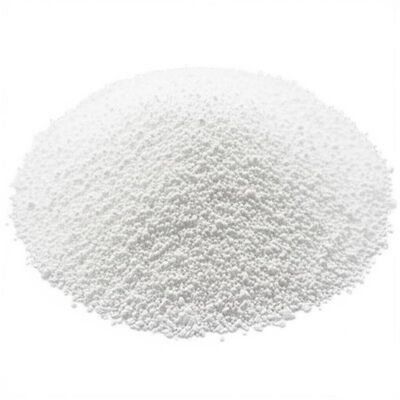
Poly(maleicanhydride-acrylicacidcopolymer) (CAS 26677-99-6), commonly known as MA/AA, is a low molecular weight polyelectrolyte. It is produced by the copolymerization of maleic anhydride and acrylic acid in a specific ratio. MA/AA exhibits exceptional threshold inhibition and dispersion properties, particularly against calcium carbonate and calcium sulfate scales. Its structural stability allows it to remain effective at high temperatures (up to 300°C), making it an indispensable additive in circulating cool water systems, low-pressure boilers, and as a powerful builder in textile dyeing and household detergent formulations.
1. Exceptional Thermal Stability
Advantage: Unlike standard polyacrylic acids, MA/AA maintains its chelating efficiency even under high-temperature and high-pH conditions.
Benefit: Reliable Protection: Perfect for high-pressure boilers and distillation units where other scale inhibitors might decompose, ensuring continuous operation without mineral buildup.
2. Dual Action: Inhibition & Dispersion
Advantage: It effectively prevents the growth of crystals while simultaneously dispersing any formed particles to prevent settling.
Benefit: Reduced Maintenance: Keeps heat exchange surfaces clean and maximizes thermal efficiency, significantly extending the time between equipment cleanings.
3. Synergistic Detergency Enhancement
Advantage: Acts as a powerful chelating agent for calcium and magnesium ions in hard water.
Benefit: Brighter Cleaning: When added to detergents or textile auxiliaries, it prevents soil redeposition and ensures vibrant colors in fabric processing by sequestering interfering metal ions.
| Property | Value/Description |
|---|---|
| CAS Number | 26677-99-6 |
| Appearance | Clear amber or colorless viscous liquid |
| Solid Content | 48.0% - 52.0% (Customizable) |
| Free Monomer (as MA) | ≤ 0.5% |
| Density (20 C) | ≥ 1.18 g/cm3 |
| pH (1% water sol.) | 2.0 - 3.0 |
| Molecular Weight | 3,000 - 5,000 (Approx.) |
| Test Item | Specification Standard | Actual Result |
|---|---|---|
| Appearance | Amber transparent liquid | Pass |
| Solid Content | ≥ 48.0% | 49.2% |
| Free Monomer (MA) | ≤ 0.5% | 0.28% |
| pH (as is) | 2.0 - 3.0 | 2.4 |
| Density (20 C) | ≥ 1.18 g/cm3 | 1.21 g/cm3 |
| Total Phosphorus (PO4) | ≤ 0.01% | Conforms |
Industrial Water Treatment
Used in circulating cool water systems, oilfield refill water, and low-pressure boilers to prevent scale formation and corrosion.
Detergent Industry
Acts as a builder and dispersant in household and industrial detergents to improve cleaning efficiency in hard water.
Textile & Dyeing
Functions as a chelating dispersant in textile printing and dyeing to remove impurities and prevent mineral interference with dyes.
Ceramic & Paper Making
Utilized as a high-performance dispersant for slurries, maintaining optimal viscosity and flow characteristics.
Standard Packaging: 25kg or 250kg plastic drums; 1250kg IBC tanks.
Loading Capacity (20' FCL):
20 - 24 MT per 20' FCL depending on palletization and drum size.
Storage: Store in a cool, dry, and well-ventilated area. Crucial: Avoid contact with skin and eyes; use appropriate PPE. The product is acidic; avoid storage in carbon steel containers for extended periods—use plastic or stainless steel.
MA/AA; Copolymer of Maleic and Acrylic Acid; Poly(maleic anhydride-co-acrylic acid); Acrylic acid-maleic anhydride copolymer.
HEDP (CAS 2809-21-4) —— Frequently blended with MA/AA for synergistic scale inhibition.
Benzotriazole (BTA) (CAS 95-14-7) —— Added for copper corrosion protection in water systems.
Sodium Hypochlorite (CAS 7681-52-9) —— Used as a biocide in systems treated with MA/AA.
Polyacrylic Acid (PAA) (CAS 9003-01-4) —— A related polymer often used in specific water conditions.
Zinc Sulfate (CAS 7733-02-0) —— Sometimes combined with MA/AA to enhance corrosion inhibition.
Q: How do you handle the risk of acidity during shipping and storage?
A: Since MA/AA is an acidic polymer (pH 2.0-3.0), we exclusively use UN-certified high-density polyethylene (HDPE) drums or IBC tanks. These are resistant to corrosion and ensure the product reaches you without leaking or degrading.
Q: We use this in high-temperature boilers; will it break down?
A: No. One of the primary advantages of our MA/AA (CAS 26677-99-6) is its thermal stability. It can withstand temperatures up to 300°C, making it much more effective for boiler applications than standard PAA or other organic phosphonates.
Q: Is the color of the liquid indicative of quality?
A: Our standard MA/AA is amber to colorless. While slight color variations occur between batches due to the polymerization process, we guarantee the solid content and scale inhibition rate (typically >90% for CaCO3) are consistent regardless of the amber shade.
Q: Can this be used in "Green" or low-phosphorus formulations?
A: Yes. Our MA/AA is a phosphorus-free scale inhibitor. This makes it an ideal choice for facilities that have strict discharge limits on phosphorus (P) levels in their wastewater.
Q: What is the shelf life, and does it settle?
A: The shelf life is 12 months when stored in original sealed packaging. It is a stable copolymer solution and does not typically settle or delaminate under normal warehouse temperatures.
Poly(maleicanhydride-acrylicacidcopolymer) (CAS 26677-99-6), commonly known as MA/AA, is a low molecular weight polyelectrolyte. It is produced by the copolymerization of maleic anhydride and acrylic acid in a specific ratio. MA/AA exhibits exceptional threshold inhibition and dispersion properties, particularly against calcium carbonate and calcium sulfate scales. Its structural stability allows it to remain effective at high temperatures (up to 300°C), making it an indispensable additive in circulating cool water systems, low-pressure boilers, and as a powerful builder in textile dyeing and household detergent formulations.
1. Exceptional Thermal Stability
Advantage: Unlike standard polyacrylic acids, MA/AA maintains its chelating efficiency even under high-temperature and high-pH conditions.
Benefit: Reliable Protection: Perfect for high-pressure boilers and distillation units where other scale inhibitors might decompose, ensuring continuous operation without mineral buildup.
2. Dual Action: Inhibition & Dispersion
Advantage: It effectively prevents the growth of crystals while simultaneously dispersing any formed particles to prevent settling.
Benefit: Reduced Maintenance: Keeps heat exchange surfaces clean and maximizes thermal efficiency, significantly extending the time between equipment cleanings.
3. Synergistic Detergency Enhancement
Advantage: Acts as a powerful chelating agent for calcium and magnesium ions in hard water.
Benefit: Brighter Cleaning: When added to detergents or textile auxiliaries, it prevents soil redeposition and ensures vibrant colors in fabric processing by sequestering interfering metal ions.
| Property | Value/Description |
|---|---|
| CAS Number | 26677-99-6 |
| Appearance | Clear amber or colorless viscous liquid |
| Solid Content | 48.0% - 52.0% (Customizable) |
| Free Monomer (as MA) | ≤ 0.5% |
| Density (20 C) | ≥ 1.18 g/cm3 |
| pH (1% water sol.) | 2.0 - 3.0 |
| Molecular Weight | 3,000 - 5,000 (Approx.) |
| Test Item | Specification Standard | Actual Result |
|---|---|---|
| Appearance | Amber transparent liquid | Pass |
| Solid Content | ≥ 48.0% | 49.2% |
| Free Monomer (MA) | ≤ 0.5% | 0.28% |
| pH (as is) | 2.0 - 3.0 | 2.4 |
| Density (20 C) | ≥ 1.18 g/cm3 | 1.21 g/cm3 |
| Total Phosphorus (PO4) | ≤ 0.01% | Conforms |
Industrial Water Treatment
Used in circulating cool water systems, oilfield refill water, and low-pressure boilers to prevent scale formation and corrosion.
Detergent Industry
Acts as a builder and dispersant in household and industrial detergents to improve cleaning efficiency in hard water.
Textile & Dyeing
Functions as a chelating dispersant in textile printing and dyeing to remove impurities and prevent mineral interference with dyes.
Ceramic & Paper Making
Utilized as a high-performance dispersant for slurries, maintaining optimal viscosity and flow characteristics.
Standard Packaging: 25kg or 250kg plastic drums; 1250kg IBC tanks.
Loading Capacity (20' FCL):
20 - 24 MT per 20' FCL depending on palletization and drum size.
Storage: Store in a cool, dry, and well-ventilated area. Crucial: Avoid contact with skin and eyes; use appropriate PPE. The product is acidic; avoid storage in carbon steel containers for extended periods—use plastic or stainless steel.
MA/AA; Copolymer of Maleic and Acrylic Acid; Poly(maleic anhydride-co-acrylic acid); Acrylic acid-maleic anhydride copolymer.
HEDP (CAS 2809-21-4) —— Frequently blended with MA/AA for synergistic scale inhibition.
Benzotriazole (BTA) (CAS 95-14-7) —— Added for copper corrosion protection in water systems.
Sodium Hypochlorite (CAS 7681-52-9) —— Used as a biocide in systems treated with MA/AA.
Polyacrylic Acid (PAA) (CAS 9003-01-4) —— A related polymer often used in specific water conditions.
Zinc Sulfate (CAS 7733-02-0) —— Sometimes combined with MA/AA to enhance corrosion inhibition.
Q: How do you handle the risk of acidity during shipping and storage?
A: Since MA/AA is an acidic polymer (pH 2.0-3.0), we exclusively use UN-certified high-density polyethylene (HDPE) drums or IBC tanks. These are resistant to corrosion and ensure the product reaches you without leaking or degrading.
Q: We use this in high-temperature boilers; will it break down?
A: No. One of the primary advantages of our MA/AA (CAS 26677-99-6) is its thermal stability. It can withstand temperatures up to 300°C, making it much more effective for boiler applications than standard PAA or other organic phosphonates.
Q: Is the color of the liquid indicative of quality?
A: Our standard MA/AA is amber to colorless. While slight color variations occur between batches due to the polymerization process, we guarantee the solid content and scale inhibition rate (typically >90% for CaCO3) are consistent regardless of the amber shade.
Q: Can this be used in "Green" or low-phosphorus formulations?
A: Yes. Our MA/AA is a phosphorus-free scale inhibitor. This makes it an ideal choice for facilities that have strict discharge limits on phosphorus (P) levels in their wastewater.
Q: What is the shelf life, and does it settle?
A: The shelf life is 12 months when stored in original sealed packaging. It is a stable copolymer solution and does not typically settle or delaminate under normal warehouse temperatures.