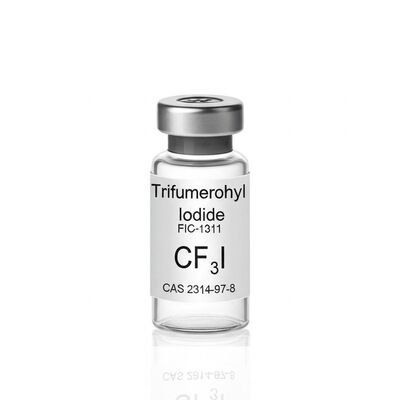
Trifluoromethyl Iodide (CAS 2314-97-8), commercially known as FIC-1311 or CF3I, is a colorless, odorless, and non-flammable gas. At room temperature and standard pressure, it is gaseous but is typically stored as a liquid under its own vapor pressure in cylinders. Trifluoromethyl Iodide (CAS 2314-97-8) is a significant "green" chemical due to its extremely short atmospheric lifetime and negligible Ozone Depletion Potential (ODP). It is widely utilized across the electronics, chemical synthesis, and fire safety industries as a high-performance, sustainable alternative to legacy halon gases and less efficient etching agents.
Environmentally Sustainable: Features an exceptionally low Global Warming Potential (GWP) and near-zero ODP, making it a compliant choice for modern environmental regulations.
High Extinguishing Efficiency: Recognized as a premier clean-agent fire suppressant for protecting sensitive electronic equipment and aviation assets.
Precision Semiconductor Etching: Provides high selectivity and superior etching ratios for silicon-based wafers in advanced microchip manufacturing.
Versatile Chemical Intermediate: Serves as a primary source for the trifluoromethyl group in the synthesis of specialized industrial chemicals and polymers.
Excellent Dielectric Properties: Its high dielectric strength makes it suitable for use as an insulating gas in high-voltage electrical switchgear.
High Purity (greater than or equal to 99.9%): Chemfine ensures electronic-grade purity to prevent contamination in sensitive manufacturing processes.
Fire Suppression Systems
Used as a gaseous clean agent in fire extinguishers for areas containing high-value electronics, telecommunications gear, and aviation components.
Semiconductor Plasma Etching
Functions as a reactive ion etching gas in the fabrication of microelectronics, offering high precision and vertical profile control on silicon substrates.
Organic Trifluoromethylation Reagent
Serves as a critical building block in organic synthesis to introduce the trifluoromethyl (CF3) group into various molecular frameworks.
High-Voltage Dielectric Insulation
Utilized as an insulating gas in electrical power distribution equipment, providing high dielectric strength and arc-quenching capabilities.
Industrial Aerosol Propellant
Acts as a specialized, non-flammable propellant for high-end industrial aerosols where chemical stability and safety are paramount.
Standard industrial packaging options for Trifluoromethyl Iodide include:
10kg or 20kg high-pressure seamless steel cylinders (Standard industrial grade).
50kg large-capacity gas cylinders for semiconductor manufacturing lines.
Tonne Tanks for large-scale fire suppression system installations.
Small lecture bottles for laboratory research and development.
All cylinders are equipped with high-integrity valves and are shipped in accordance with international compressed gas regulations.
Trifluoromethyl Iodide should be stored in a cool, dry, and well-ventilated dedicated gas storage area. Cylinders must be kept upright and securely fastened to prevent falling. Store away from direct sunlight, heat sources, and open flames. Although non-flammable, the cylinders are under high pressure and should be protected from physical damage. Keep away from strong oxidizing agents and molten alkali metals. The product is chemically stable with an indefinite shelf life if the cylinder integrity is maintained.
FIC-1311, Iodotrifluoromethane, CF3I, Trifluoromethyliodide, Monoiodotrifluoromethane.
| Property | Value/Description |
| CAS Number | 2314-97-8 |
| Molecular Formula | CF3I |
| Molecular Weight | 195.91 |
| Appearance | Colorless gas (liquid under pressure) |
| Boiling Point | -22.5 degrees C |
| Melting Point | -110 degrees C |
| Density (Liquid) | 2.36 g/cm3 (at -25 degrees C) |
| Vapor Pressure | 0.53 MPa (at 25 degrees C) |
| Solubility | Insoluble in water; soluble in many organic solvents |
| Test Item | Specification Standard |
| Appearance | Colorless and Odorless Gas |
| Assay (GC) | greater than or equal to 99.9% |
| Moisture (KF) | less than or equal to 10 ppm |
| Acidity (as HF) | less than or equal to 1 ppm |
| Non-Volatile Residue | less than or equal to 50 ppm |
| Oxygen + Nitrogen | less than or equal to 100 ppm |
Pentafluoroethane (HFC-125) – CAS 354-33-6
Heptafluoropropane (HFC-227ea) – CAS 431-89-0
Trifluoromethane (HFC-23) – CAS 75-46-7
Perfluorobutane – CAS 355-25-9
Sulfur Hexafluoride (SF6) – CAS 2551-62-4
Carbon Tetrafluoride (CF4) – CAS 75-73-0
Hexafluoroethane (C2F6) – CAS 76-16-4
Iodoform – CAS 75-47-8
Methyl Iodide – CAS 74-88-4
Bromotrifluoromethane (Halon 1301) – CAS 75-63-8
Q: Is FIC-1311 a safe replacement for Halon 1301?
A: Yes, it offers comparable fire extinguishing efficiency but with a much shorter atmospheric lifetime, making it an environmentally superior choice for critical systems.
Q: How does CF3I improve the semiconductor etching process?
A: The iodine atom in the molecule helps produce a more directional ion flux, which results in sharper vertical walls and higher selectivity compared to standard fluorocarbon gases.
Q: Can this gas be used for liquid-phase synthesis?
A: Yes, Trifluoromethyl Iodide can be bubbled into organic solvents where it reacts with various substrates to introduce the CF3 group, often facilitated by metal catalysts.
Q: Can CF3I replace SF6 in electrical switchgear?
A: It is being used in gas mixtures as a sustainable alternative to SF6 because it has high dielectric strength and a much lower global warming impact.
Q: Is FIC-1311 flammable when used as a propellant?
A: No, it is a non-flammable gas, providing an extra layer of safety for specialized industrial aerosol applications that require stable delivery.
Trifluoromethyl Iodide (CAS 2314-97-8), commercially known as FIC-1311 or CF3I, is a colorless, odorless, and non-flammable gas. At room temperature and standard pressure, it is gaseous but is typically stored as a liquid under its own vapor pressure in cylinders. Trifluoromethyl Iodide (CAS 2314-97-8) is a significant "green" chemical due to its extremely short atmospheric lifetime and negligible Ozone Depletion Potential (ODP). It is widely utilized across the electronics, chemical synthesis, and fire safety industries as a high-performance, sustainable alternative to legacy halon gases and less efficient etching agents.
Environmentally Sustainable: Features an exceptionally low Global Warming Potential (GWP) and near-zero ODP, making it a compliant choice for modern environmental regulations.
High Extinguishing Efficiency: Recognized as a premier clean-agent fire suppressant for protecting sensitive electronic equipment and aviation assets.
Precision Semiconductor Etching: Provides high selectivity and superior etching ratios for silicon-based wafers in advanced microchip manufacturing.
Versatile Chemical Intermediate: Serves as a primary source for the trifluoromethyl group in the synthesis of specialized industrial chemicals and polymers.
Excellent Dielectric Properties: Its high dielectric strength makes it suitable for use as an insulating gas in high-voltage electrical switchgear.
High Purity (greater than or equal to 99.9%): Chemfine ensures electronic-grade purity to prevent contamination in sensitive manufacturing processes.
Fire Suppression Systems
Used as a gaseous clean agent in fire extinguishers for areas containing high-value electronics, telecommunications gear, and aviation components.
Semiconductor Plasma Etching
Functions as a reactive ion etching gas in the fabrication of microelectronics, offering high precision and vertical profile control on silicon substrates.
Organic Trifluoromethylation Reagent
Serves as a critical building block in organic synthesis to introduce the trifluoromethyl (CF3) group into various molecular frameworks.
High-Voltage Dielectric Insulation
Utilized as an insulating gas in electrical power distribution equipment, providing high dielectric strength and arc-quenching capabilities.
Industrial Aerosol Propellant
Acts as a specialized, non-flammable propellant for high-end industrial aerosols where chemical stability and safety are paramount.
Standard industrial packaging options for Trifluoromethyl Iodide include:
10kg or 20kg high-pressure seamless steel cylinders (Standard industrial grade).
50kg large-capacity gas cylinders for semiconductor manufacturing lines.
Tonne Tanks for large-scale fire suppression system installations.
Small lecture bottles for laboratory research and development.
All cylinders are equipped with high-integrity valves and are shipped in accordance with international compressed gas regulations.
Trifluoromethyl Iodide should be stored in a cool, dry, and well-ventilated dedicated gas storage area. Cylinders must be kept upright and securely fastened to prevent falling. Store away from direct sunlight, heat sources, and open flames. Although non-flammable, the cylinders are under high pressure and should be protected from physical damage. Keep away from strong oxidizing agents and molten alkali metals. The product is chemically stable with an indefinite shelf life if the cylinder integrity is maintained.
FIC-1311, Iodotrifluoromethane, CF3I, Trifluoromethyliodide, Monoiodotrifluoromethane.
| Property | Value/Description |
| CAS Number | 2314-97-8 |
| Molecular Formula | CF3I |
| Molecular Weight | 195.91 |
| Appearance | Colorless gas (liquid under pressure) |
| Boiling Point | -22.5 degrees C |
| Melting Point | -110 degrees C |
| Density (Liquid) | 2.36 g/cm3 (at -25 degrees C) |
| Vapor Pressure | 0.53 MPa (at 25 degrees C) |
| Solubility | Insoluble in water; soluble in many organic solvents |
| Test Item | Specification Standard |
| Appearance | Colorless and Odorless Gas |
| Assay (GC) | greater than or equal to 99.9% |
| Moisture (KF) | less than or equal to 10 ppm |
| Acidity (as HF) | less than or equal to 1 ppm |
| Non-Volatile Residue | less than or equal to 50 ppm |
| Oxygen + Nitrogen | less than or equal to 100 ppm |
Pentafluoroethane (HFC-125) – CAS 354-33-6
Heptafluoropropane (HFC-227ea) – CAS 431-89-0
Trifluoromethane (HFC-23) – CAS 75-46-7
Perfluorobutane – CAS 355-25-9
Sulfur Hexafluoride (SF6) – CAS 2551-62-4
Carbon Tetrafluoride (CF4) – CAS 75-73-0
Hexafluoroethane (C2F6) – CAS 76-16-4
Iodoform – CAS 75-47-8
Methyl Iodide – CAS 74-88-4
Bromotrifluoromethane (Halon 1301) – CAS 75-63-8
Q: Is FIC-1311 a safe replacement for Halon 1301?
A: Yes, it offers comparable fire extinguishing efficiency but with a much shorter atmospheric lifetime, making it an environmentally superior choice for critical systems.
Q: How does CF3I improve the semiconductor etching process?
A: The iodine atom in the molecule helps produce a more directional ion flux, which results in sharper vertical walls and higher selectivity compared to standard fluorocarbon gases.
Q: Can this gas be used for liquid-phase synthesis?
A: Yes, Trifluoromethyl Iodide can be bubbled into organic solvents where it reacts with various substrates to introduce the CF3 group, often facilitated by metal catalysts.
Q: Can CF3I replace SF6 in electrical switchgear?
A: It is being used in gas mixtures as a sustainable alternative to SF6 because it has high dielectric strength and a much lower global warming impact.
Q: Is FIC-1311 flammable when used as a propellant?
A: No, it is a non-flammable gas, providing an extra layer of safety for specialized industrial aerosol applications that require stable delivery.