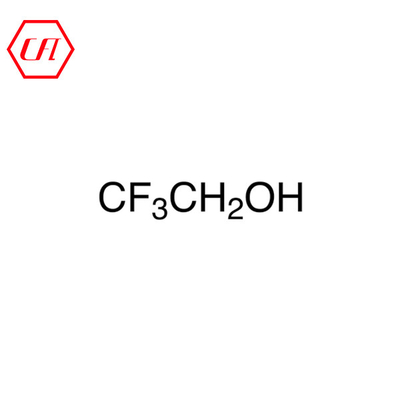
Solubility: It is miscible with water, ethanol, etc.
Chemical Properties:
Strong Acidity: Due to the strong electron-withdrawing effect of the trifluoromethyl group, its acidity is stronger than that of ethanol, with a pKa of 12.46 ± 0.10.
Stability: It is relatively stable under normal temperature and pressure conditions, but it may react under certain specific conditions, such as in the presence of strong oxidizing agents.
Reaction Activity: As an alcohol, it can undergo typical alcohol reactions such as esterification reactions. Moreover, due to the presence of fluorine atoms, it exhibits special reaction activities in some organic reactions. For example, it can serve as a precursor of trifluoromethylating reagents to provide trifluoromethyl groups for reactions.
Applications
Field of Organic Synthesis:
Reaction Solvent: It is an excellent organic solvent widely used in various organic synthesis reactions, such as alkylation, acylation, and condensation reactions. It can dissolve many organic compounds and facilitate the progress of reactions.
Reagent for Reaction Participation: It participates as a reagent in the synthesis of fluorinated organic compounds, such as the synthesis of fluorinated alcohols, esters, and ethers. These fluorinated organic compounds have important applications in the field of materials science and can be used to improve the properties of materials, such as surface properties and corrosion resistance.
Field of Materials Science: It is used to prepare fluorinated polymers and materials. In the polymerization reaction, it can serve as a chain transfer agent or a comonomer to introduce fluorine elements into the polymer molecular chain, thereby enhancing the performance of the polymer, such as improving its weather resistance, chemical corrosion resistance, and surface properties.
Field of Biochemistry: In the study of protein folding, it can be used as a co-solvent for nuclear magnetic resonance spectroscopy. It can effectively dissolve peptides and proteins, and changes in its concentration can have a significant impact on the three-dimensional structure of proteins.
Solubility: It is miscible with water, ethanol, etc.
Chemical Properties:
Strong Acidity: Due to the strong electron-withdrawing effect of the trifluoromethyl group, its acidity is stronger than that of ethanol, with a pKa of 12.46 ± 0.10.
Stability: It is relatively stable under normal temperature and pressure conditions, but it may react under certain specific conditions, such as in the presence of strong oxidizing agents.
Reaction Activity: As an alcohol, it can undergo typical alcohol reactions such as esterification reactions. Moreover, due to the presence of fluorine atoms, it exhibits special reaction activities in some organic reactions. For example, it can serve as a precursor of trifluoromethylating reagents to provide trifluoromethyl groups for reactions.
Applications
Field of Organic Synthesis:
Reaction Solvent: It is an excellent organic solvent widely used in various organic synthesis reactions, such as alkylation, acylation, and condensation reactions. It can dissolve many organic compounds and facilitate the progress of reactions.
Reagent for Reaction Participation: It participates as a reagent in the synthesis of fluorinated organic compounds, such as the synthesis of fluorinated alcohols, esters, and ethers. These fluorinated organic compounds have important applications in the field of materials science and can be used to improve the properties of materials, such as surface properties and corrosion resistance.
Field of Materials Science: It is used to prepare fluorinated polymers and materials. In the polymerization reaction, it can serve as a chain transfer agent or a comonomer to introduce fluorine elements into the polymer molecular chain, thereby enhancing the performance of the polymer, such as improving its weather resistance, chemical corrosion resistance, and surface properties.
Field of Biochemistry: In the study of protein folding, it can be used as a co-solvent for nuclear magnetic resonance spectroscopy. It can effectively dissolve peptides and proteins, and changes in its concentration can have a significant impact on the three-dimensional structure of proteins.