| Brand Name: | Chemfine |
| MOQ: | 1000 Kg |
| Price: | USD 4-6 / Kilograms |
| Packaging Details: | 25kg drum |
| Payment Terms: | L/C,T/T |
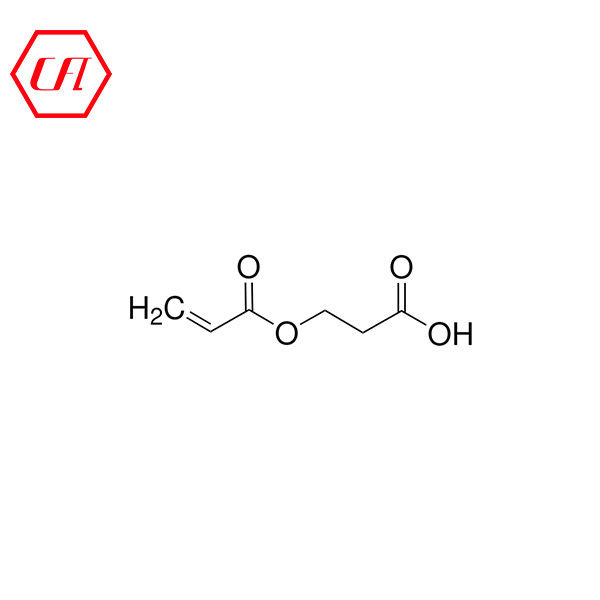
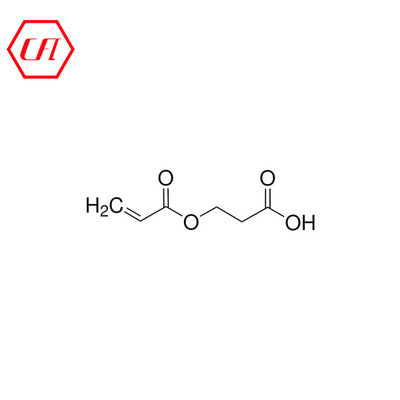
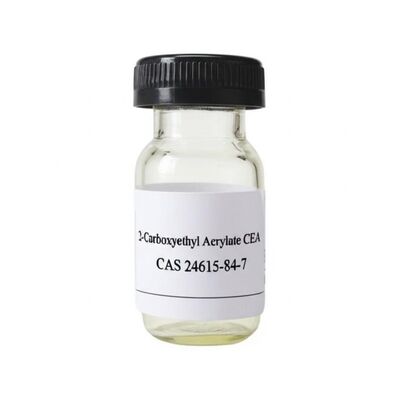
2-Carboxyethyl Acrylate (CAS 24615-84-7), also known as CEA or $beta$-CEA, is a functional acrylic monomer produced by the addition reaction of acrylic acid. It contains both a polymerizable vinyl group and a terminal carboxylic acid group. This unique structure allows it to act as an internal plasticizer and a powerful adhesion promoter. It is widely utilized in the synthesis of pressure-sensitive adhesives, UV-curable coatings, and thermosetting resins to enhance mechanical properties and substrate wetting.
Advantage: Combines high polymerization reactivity with strong polar bonding sites.
Benefit: Extreme Adhesion: Dramatically improves bonding strength to difficult substrates like untreated metal, glass, and ceramics.
Advantage: Low volatility compared to traditional acrylic acid.
Benefit: Improved Work Environment: Reduces pungent odors and inhalation risks in the production hall, ensuring a safer workspace.
Advantage: Enhances the water-solubility or dispersibility of the resulting polymer.
Benefit: Process Versatility: Perfect for formulating high-stability waterborne emulsions and eco-friendly coatings.
Used as a reactive diluent and adhesion promoter in UV inks and coatings to ensure the film sticks firmly to glass and metal surfaces.
A key component in pressure-sensitive adhesives (PSA) and structural adhesives to increase peel strength and shear resistance.
Used in the synthesis of waterborne acrylic emulsions to provide freeze-thaw stability and improved mechanical stability of the latex.
Acts as a crosslinking agent in textile finishes and paper coatings to improve water resistance and durability.
Packaging: 200kg plastic drums; 1000kg IBC tanks.
Storage: Store in a cool, dry, and well-ventilated area. Crucial: Keep away from direct sunlight to prevent premature polymerization. Contains polymerization inhibitors (typically MEHQ); maintain an oxygen-containing atmosphere above the liquid to ensure inhibitor efficacy. Recommended storage temperature: 5°C - 30°C.
CEA; $beta$-CEA; 3-Acryloyloxypropionic acid; 2-Carboxyethyl acrylate ester; Acrylic acid dimer (approximate).
| Property | Value/Description |
|---|---|
| CAS Number | 24615-84-7 |
| EINECS Number | 246-359-9 |
| Molecular Formula | $C_6H_8O_4$ |
| Molecular Weight | 144.13 |
| Appearance | Colorless to light yellow transparent liquid |
| Boiling Point | ~205°C at 760 mmHg |
| Flash Point | > 93°C |
| Density | 1.19 g/cm³ (at 25°C) |
| Refractive Index | 1.450 - 1.460 |
| Test Item | Specification Standard |
|---|---|
| Appearance | Colorless to Pale Yellow Liquid |
| Assay (GC) | ≥ 98.0% |
| Acid Value (mg KOH/g) | 350 - 400 |
| Moisture (KF) | ≤ 0.5% |
| Inhibitor (MEHQ, ppm) | 500 - 1000 (Adjustable) |
| Color (APHA) | ≤ 100 |
Q: Why does the color vary between batches?
A: Slight yellowing is common due to the nature of the monomers and inhibitors. This typically does not affect the polymerization performance. We keep APHA below 100 for high-end applications.
Q: Is this product the same as the "Acrylic Acid Dimer"?
A: Chemically, it is the primary component of the dimer. While industrial grades may contain higher oligomers, our high-purity grade is optimized for consistent reactivity.
Q: Does it require special shipping conditions?
A: It is not a regulated dangerous good for transport in many regions, but we recommend avoiding extreme heat. In summer, we use refrigerated containers or expedited shipping.
Q: How much CEA should I add to my formulation?
A: For adhesion promotion, adding 3% to 8% to the total monomer weight is usually sufficient to see a significant improvement.
Q: Can it be used in food packaging?
A: Use in food contact materials depends on local regulations (FDA/EFSA). Please consult our technical team for specific compliance data.
| Brand Name: | Chemfine |
| MOQ: | 1000 Kg |
| Price: | USD 4-6 / Kilograms |
| Packaging Details: | 25kg drum |
| Payment Terms: | L/C,T/T |
2-Carboxyethyl Acrylate (CAS 24615-84-7), also known as CEA or $beta$-CEA, is a functional acrylic monomer produced by the addition reaction of acrylic acid. It contains both a polymerizable vinyl group and a terminal carboxylic acid group. This unique structure allows it to act as an internal plasticizer and a powerful adhesion promoter. It is widely utilized in the synthesis of pressure-sensitive adhesives, UV-curable coatings, and thermosetting resins to enhance mechanical properties and substrate wetting.
Advantage: Combines high polymerization reactivity with strong polar bonding sites.
Benefit: Extreme Adhesion: Dramatically improves bonding strength to difficult substrates like untreated metal, glass, and ceramics.
Advantage: Low volatility compared to traditional acrylic acid.
Benefit: Improved Work Environment: Reduces pungent odors and inhalation risks in the production hall, ensuring a safer workspace.
Advantage: Enhances the water-solubility or dispersibility of the resulting polymer.
Benefit: Process Versatility: Perfect for formulating high-stability waterborne emulsions and eco-friendly coatings.
Used as a reactive diluent and adhesion promoter in UV inks and coatings to ensure the film sticks firmly to glass and metal surfaces.
A key component in pressure-sensitive adhesives (PSA) and structural adhesives to increase peel strength and shear resistance.
Used in the synthesis of waterborne acrylic emulsions to provide freeze-thaw stability and improved mechanical stability of the latex.
Acts as a crosslinking agent in textile finishes and paper coatings to improve water resistance and durability.
Packaging: 200kg plastic drums; 1000kg IBC tanks.
Storage: Store in a cool, dry, and well-ventilated area. Crucial: Keep away from direct sunlight to prevent premature polymerization. Contains polymerization inhibitors (typically MEHQ); maintain an oxygen-containing atmosphere above the liquid to ensure inhibitor efficacy. Recommended storage temperature: 5°C - 30°C.
CEA; $beta$-CEA; 3-Acryloyloxypropionic acid; 2-Carboxyethyl acrylate ester; Acrylic acid dimer (approximate).
| Property | Value/Description |
|---|---|
| CAS Number | 24615-84-7 |
| EINECS Number | 246-359-9 |
| Molecular Formula | $C_6H_8O_4$ |
| Molecular Weight | 144.13 |
| Appearance | Colorless to light yellow transparent liquid |
| Boiling Point | ~205°C at 760 mmHg |
| Flash Point | > 93°C |
| Density | 1.19 g/cm³ (at 25°C) |
| Refractive Index | 1.450 - 1.460 |
| Test Item | Specification Standard |
|---|---|
| Appearance | Colorless to Pale Yellow Liquid |
| Assay (GC) | ≥ 98.0% |
| Acid Value (mg KOH/g) | 350 - 400 |
| Moisture (KF) | ≤ 0.5% |
| Inhibitor (MEHQ, ppm) | 500 - 1000 (Adjustable) |
| Color (APHA) | ≤ 100 |
Q: Why does the color vary between batches?
A: Slight yellowing is common due to the nature of the monomers and inhibitors. This typically does not affect the polymerization performance. We keep APHA below 100 for high-end applications.
Q: Is this product the same as the "Acrylic Acid Dimer"?
A: Chemically, it is the primary component of the dimer. While industrial grades may contain higher oligomers, our high-purity grade is optimized for consistent reactivity.
Q: Does it require special shipping conditions?
A: It is not a regulated dangerous good for transport in many regions, but we recommend avoiding extreme heat. In summer, we use refrigerated containers or expedited shipping.
Q: How much CEA should I add to my formulation?
A: For adhesion promotion, adding 3% to 8% to the total monomer weight is usually sufficient to see a significant improvement.
Q: Can it be used in food packaging?
A: Use in food contact materials depends on local regulations (FDA/EFSA). Please consult our technical team for specific compliance data.